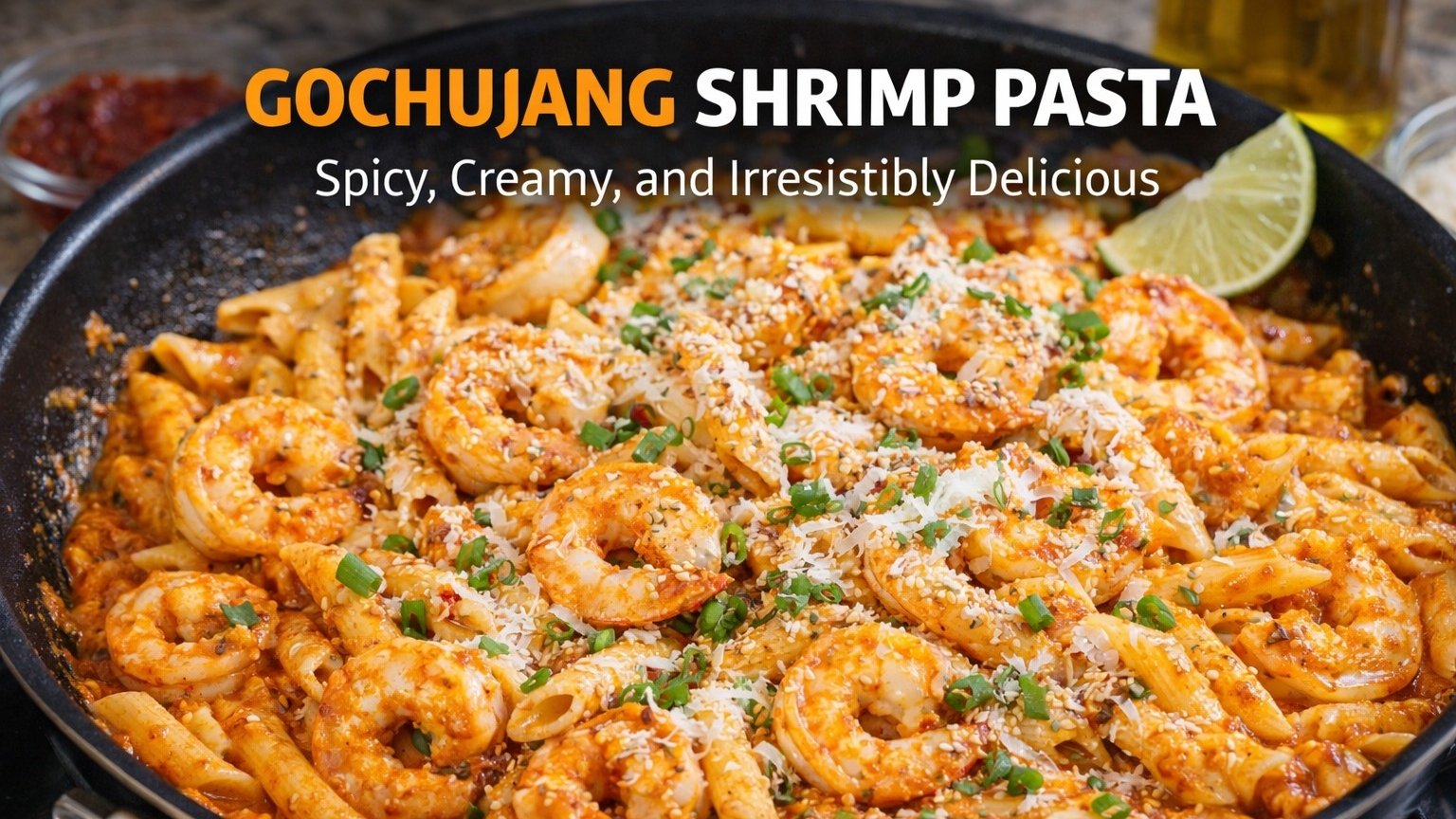
Gochujang shrimp pasta is what happens when Korean spice meets Italian soul food, and they decide to become best friends. This dish combines tender shrimp, chewy pasta, and the deep umami heat of gochujang into one irresistible bowl.
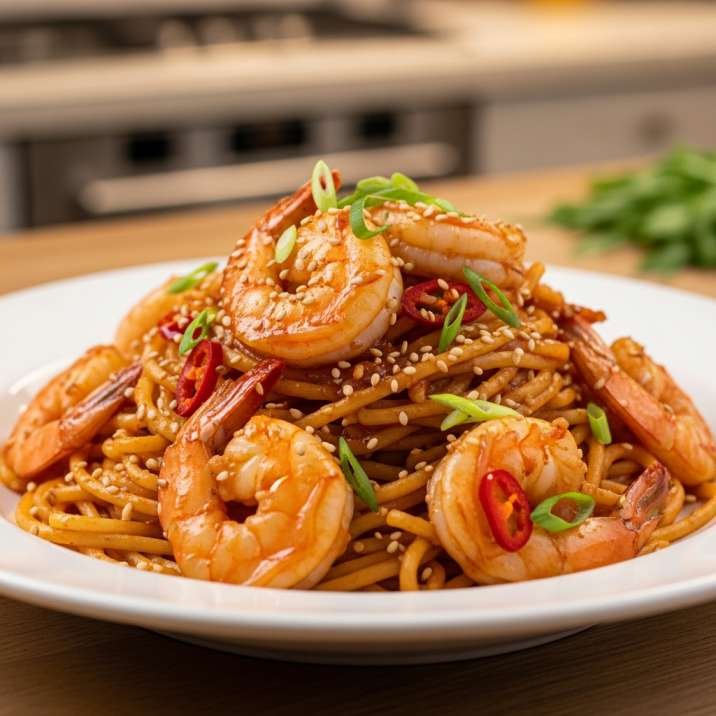
Fusion recipes are booming in the U.S. because people crave bold flavours without complicated techniques. This pasta fits that trend perfectly. It is quick, comforting, and exciting without feeling strange.
Let’s break down why this dish works, how to make it perfectly, and why gochujang deserves a permanent spot in your pantry.
What Is Gochujang?
Gochujang is a traditional Korean fermented chilli paste made from:
- Red chilli powder
- Glutinous rice
- Fermented soybeans
- Salt
It has a thick texture and a flavour profile that is:
- Spicy
- Slightly sweet
- Deeply savory
Unlike hot sauce, gochujang adds body and complexity, not just heat.
Reliable source:
Korean Food Promotion Institute – Gochujang is a fermented chilli paste with umami flavour
https://www.koreanfoodfoundation.org
Why Shrimp Works So Well With Gochujang
Shrimp is mild and slightly sweet. Gochujang is bold and savoury. That contrast creates balance instead of chaos.
Shrimp also cooks fast, which means:
- Less drying out
- Better texture
- Faster dinner
Nutritionally, shrimp is:
- High in protein
- Low in calories
- Rich in selenium and vitamin B12
Source:
USDA FoodData Central – Shrimp nutrition
https://fdc.nal.usda.gov
Shrimp does not overpower the sauce. It absorbs it. That’s why this pairing works better than chicken or beef for this dish.
Why Pasta Works With Gochujang
Pasta does three important jobs here:
- It absorbs sauce
- It balances spice
- It delivers comfort
Cream or butter smooths out gochujang’s heat. Garlic and Parmesan connect Korean flavour to Italian structure. The result feels new but familiar.
Think of it like this:
Gochujang brings the drama. Pasta brings the therapy.
Flavour Profile of Gochujang Shrimp Pasta
This dish hits all five tastes:
- Spicy: From gochujang
- Sweet: From sugar or honey
- Savoury: From garlic and shrimp
- Salty: From soy sauce and cheese
- Umami: From fermentation
Balanced flavour increases perceived richness, which is why people find this pasta “addictive.”
That is food science, not magic.
Ingredients You Will Need
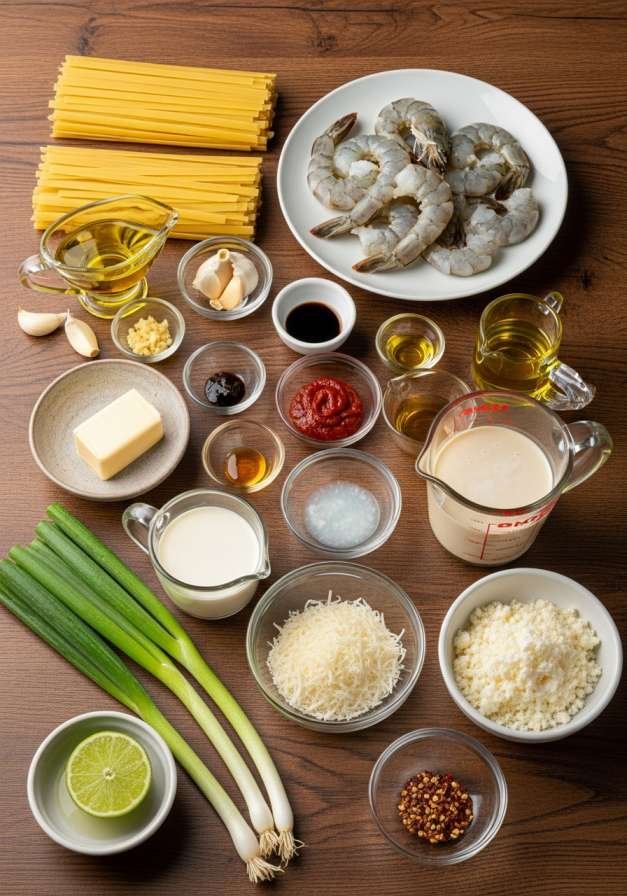
Core Ingredients
- Shrimp (raw, peeled, deveined)
- Pasta (penne, linguine, or spaghetti)
- Gochujang
- Garlic
- Heavy cream or half-and-half
- Butter
- Olive oil
- Parmesan cheese
Flavor Boosters
- Soy sauce
- Honey or brown sugar
- Red pepper flakes
- Green onions
- Lime juice
Every ingredient serves a purpose. Nothing is decorative.
How to Make Gochujang Shrimp Pasta (Step-by-Step)
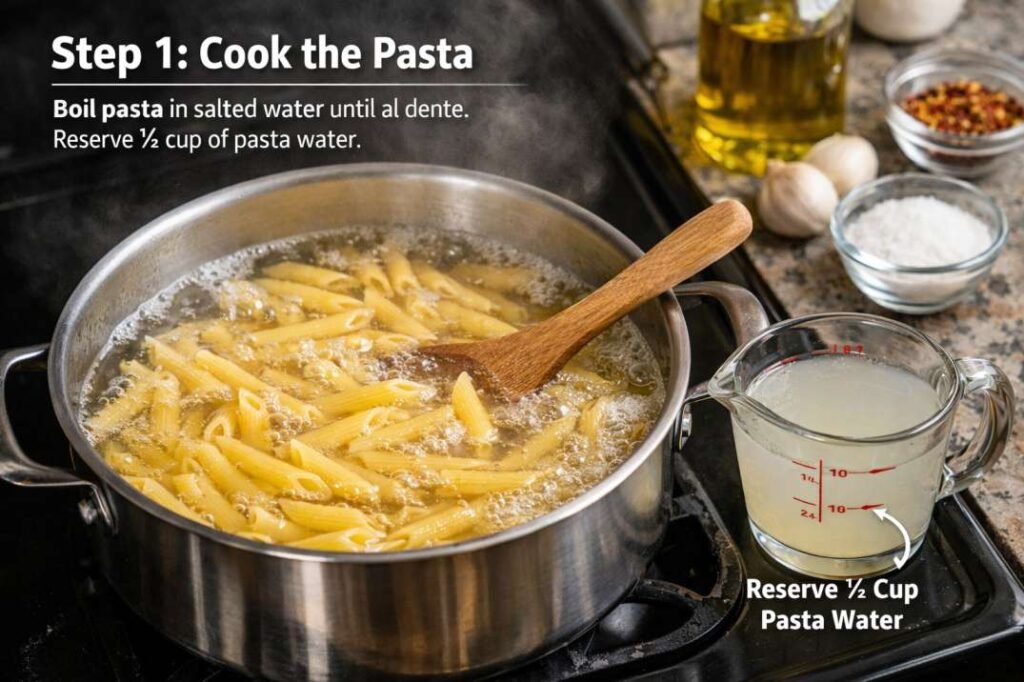
1. Cook the Pasta
Boil pasta in salted water until al dente. Reserve ½ cup of pasta water.
Salted water improves starch gelatinisation and seasoning penetration. That’s culinary science, not superstition.
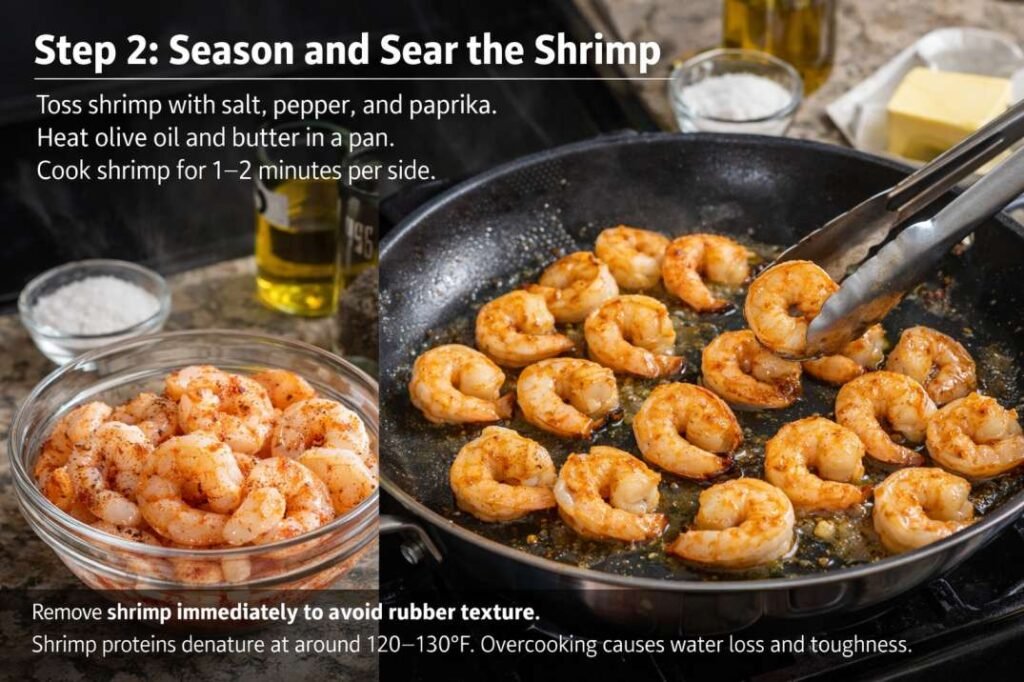
2. Season and Sear the Shrimp
Toss shrimp with salt, pepper, and paprika.
Heat olive oil and butter in a pan.
Cook shrimp for 1–2 minutes per side.
Remove the shrimp immediately to avoid a rubbery texture.
Shrimp proteins denature at around 120–130°F. Overcooking causes water loss and toughness.
Source: Harvard School of Public Health – Protein denaturation
https://www.hsph.harvard.edu
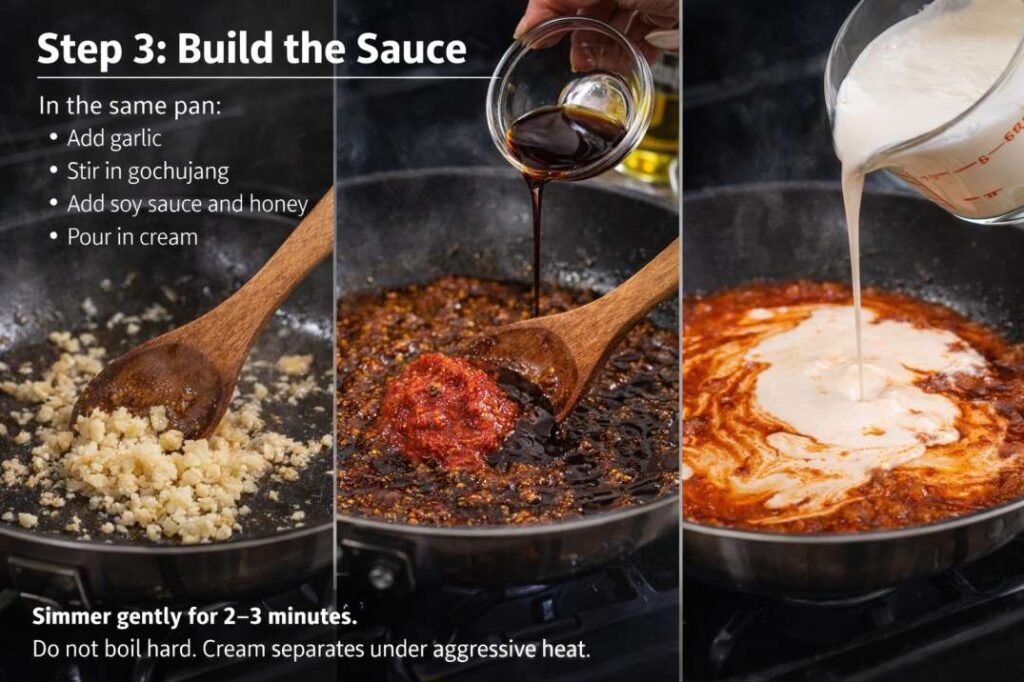
3. Build the Sauce
In the same pan:
- Add garlic
- Stir in gochujang
- Add soy sauce and honey.
- Pour in cream
Simmer gently for 2–3 minutes. Do not boil hard. Cream separates under aggressive heat.
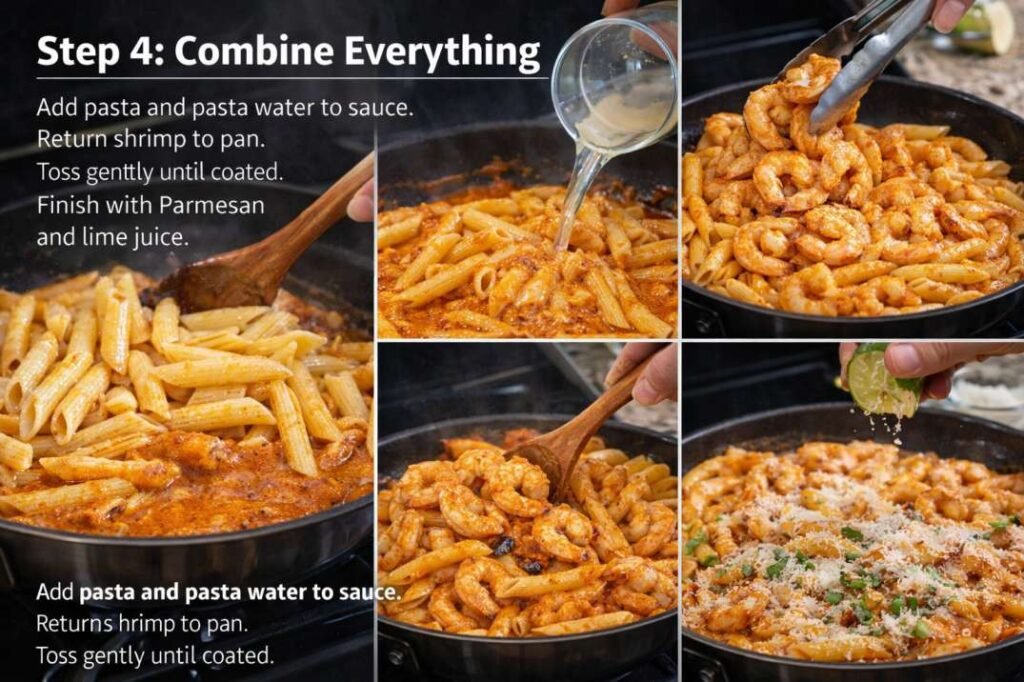
4. Combine Everything
Add pasta and pasta water to the sauce.
Return shrimp to the pan.
Toss gently until coated.
Finish with Parmesan and lime juice.
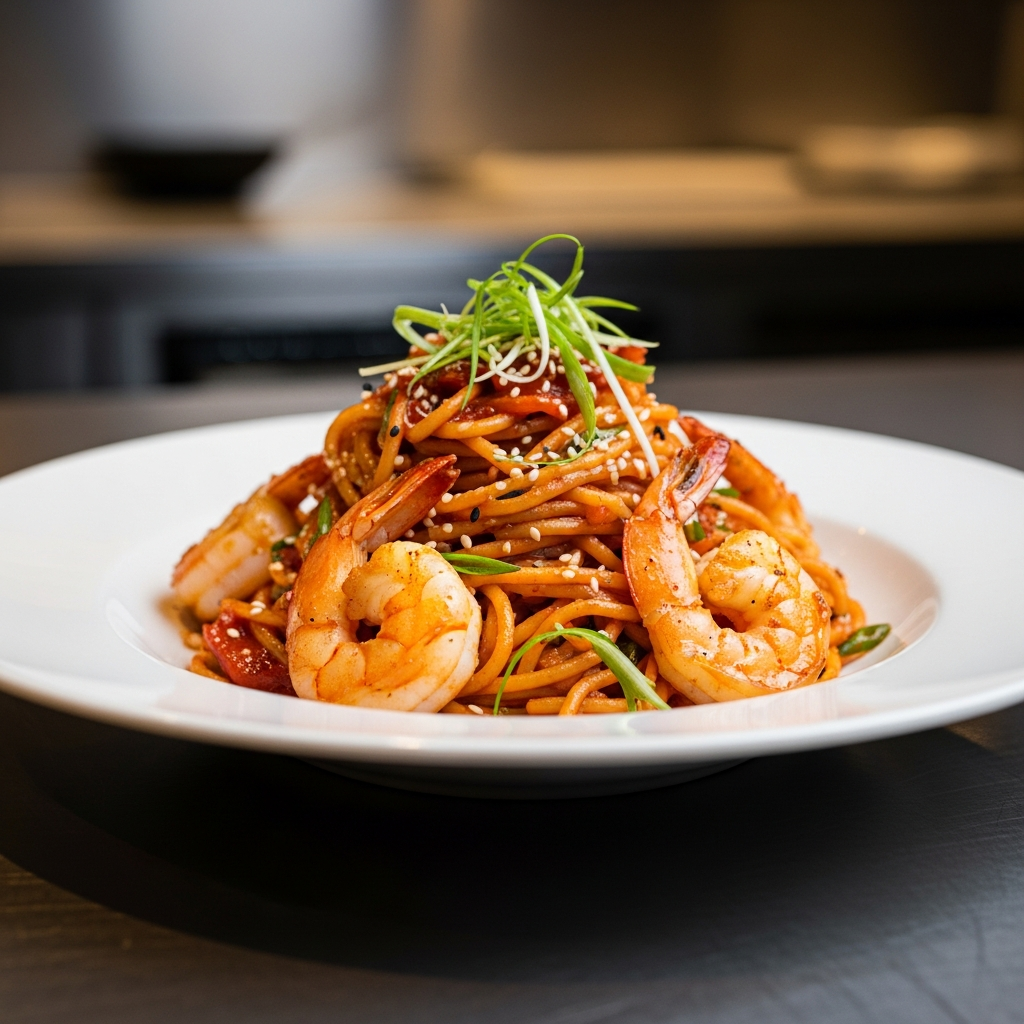

Gochujang Shrimp Pasta recipe
Ingredients
Equipment
Method
- Cook pasta in salted water. Reserve ½ cup of pasta water.
- Heat oil and butter. Sear shrimp 1–2 minutes per side. Remove.
- Add garlic to the pan. Cook 30 seconds.
- Stir in gochujang, soy sauce, and honey.
- Pour in cream. Simmer gently.
- Add pasta and pasta water. Toss well.
- Return shrimp. Heat through.
- Finish with Parmesan, lime juice, and green onions.
Notes
- Shrimp cooks fast, so it prevents over-drying compared to chicken.
- Gochujang provides umami and spice without the need for MSG.
- Pasta water thickens the sauce naturally through starch.
- Cream balances chilli heat by binding capsaicin.
- Lime juice adds acidity, improving flavour perception.
- Fusion works because both Korean and Italian cuisines value garlic, fermentation, and starch-based comfort food.
Tips for Perfect Gochujang Shrimp Pasta
- Use authentic Korean gochujang, not chilli garlic paste
- Do not boil the sauce aggressively.
- Always reserve pasta water.
- Add cheese to the heat
- Taste before adding salt
Salt levels vary in gochujang brands. Always adjust last.
You’ll also find many other great pasta recipes here that you should definitely try. Tagliatelle Pasta Recipe and Red Pepper Pasta Recipe
Variations You Can Try
Spicy Version
Add extra gochujang and chilli flakes.
Dairy-Free Version
Use coconut milk instead of cream.
Veggie Version
Replace shrimp with mushrooms or tofu.
Lemon-Garlic Version
Add lemon zest for brightness.
Each version keeps the core flavour structure intact.
Is Gochujang Shrimp Pasta Healthy?
This dish provides:
- Lean protein from shrimp
- Carbohydrates for energy
- Healthy fats from olive oil
Shrimp contains omega-3 fatty acids and selenium.
Source: American Heart Association – Seafood nutrition
https://www.heart.org
Moderation matters. This is comfort food, not diet food.
Why Americans Love This Dish
Americans enjoy:
- Creamy pasta
- Spicy sauces
- Asian-inspired flavors
This recipe hits all three.
According to market data, Korean food popularity has grown significantly in U.S. restaurants over the past decade.
Source: National Restaurant Association
https://restaurant.org
Fusion foods feel adventurous without being intimidating. That is why this dish works.
Storage and Reheating
Storage:
Refrigerate up to 3 days in an airtight container.
Reheating:
Reheat gently on the stovetop with a splash of milk.
Microwaving can overcook shrimp. Slow heat preserves texture.
Common Mistakes to Avoid
- Overcooking shrimp
- Using sweet chilli sauce instead of gochujang
- Skipping pasta water
- Adding cheese over high heat
- Oversalting early
Most pasta disasters come from rushing. This dish rewards patience.
Calorie Information (Per Serving – Approx.)
≈ 520–580 calories
Macronutrient estimate:
- Protein: ~32g
- Carbohydrates: ~55g
- Fat: ~22g
Source logic:
Shrimp = high protein, low fat
Cream + cheese = the main calorie contributors
Pasta = primary carb source
(USDA FoodData Central used for ingredient averages.)
Frequently Asked Questions
How long does gochujang sauce last in the fridge?
Opened gochujang lasts 6 to 12 months in the refrigerator when stored in an airtight container.
Do you need to cook gochujang before eating?
No. Gochujang is safe to eat without cooking, but cooking improves flavour and reduces the raw fermented sharpness.
What does gochujang do to your body?
Gochujang may support gut health due to fermentation and may slightly increase metabolism because it contains capsaicin. It is also high in sodium, so it should be consumed in moderation.
How much gochujang to use in pasta?
Use 1 to 2 tablespoons of gochujang per 2 servings of pasta for balanced heat and flavour.
Can gochujang go unrefrigerated?
Unopened gochujang can be stored at room temperature in a cool, dark place. Once opened, it should be refrigerated.
Can I put gochujang in the freezer?
Yes. Gochujang can be frozen for long-term storage. Freezing does not spoil it, though the texture may thicken slightly.
Final Thoughts
Gochujang shrimp pasta is bold without being chaotic. It is spicy without being punishing. It is creamy without being heavy.
This dish proves that fusion food works when it respects both cultures.
Italian pasta gives structure.
Korean gochujang gives personality.
Shrimp keeps everything light.
And together, they create a bowl that makes your taste buds question their life choices in a good way.
Trusted Sources Used:
- Korean Food Promotion Institute – Gochujang
- USDA FoodData Central – Shrimp nutrition
- Harvard School of Public Health – Protein cooking science
- American Heart Association – Seafood benefits
- National Restaurant Association – Food trends
[…] pasta? Try Gochujang Shrimp Pasta: A Bold Fusion of Korean Heat and Italian Comfort. Next, it’s another seafood pasta favourite on […]