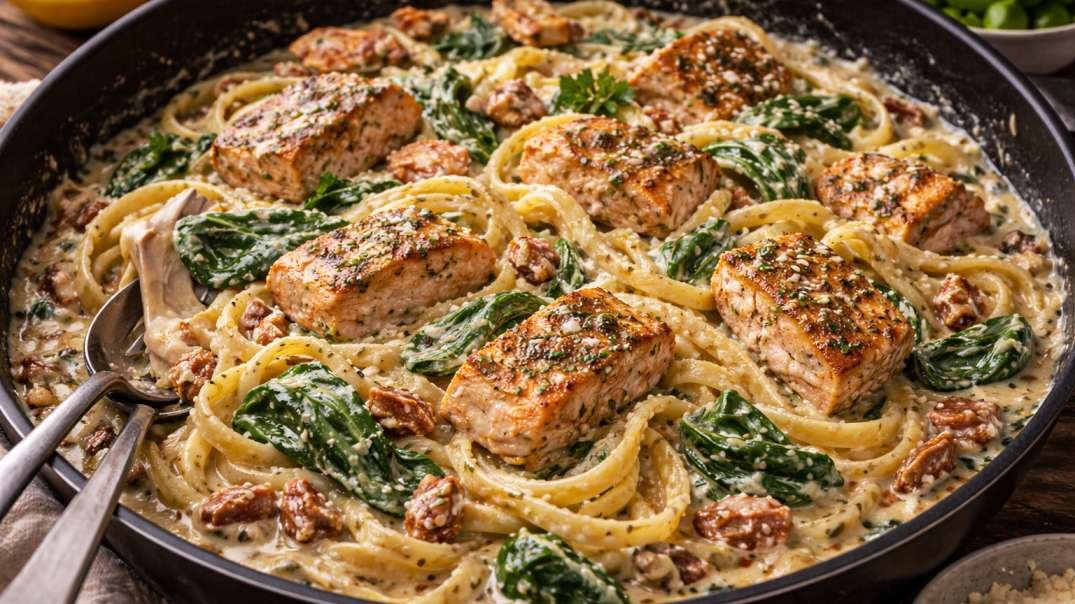
When I want a dinner that feels both comforting and elegant, I make Tuscan salmon pasta. It has everything I love in a pasta dish: tender salmon, creamy sauce, garlic, sun-dried tomatoes, and fresh spinach. This recipe is inspired by classic Italian-American flavours, but it’s designed for real home cooking in the USA.
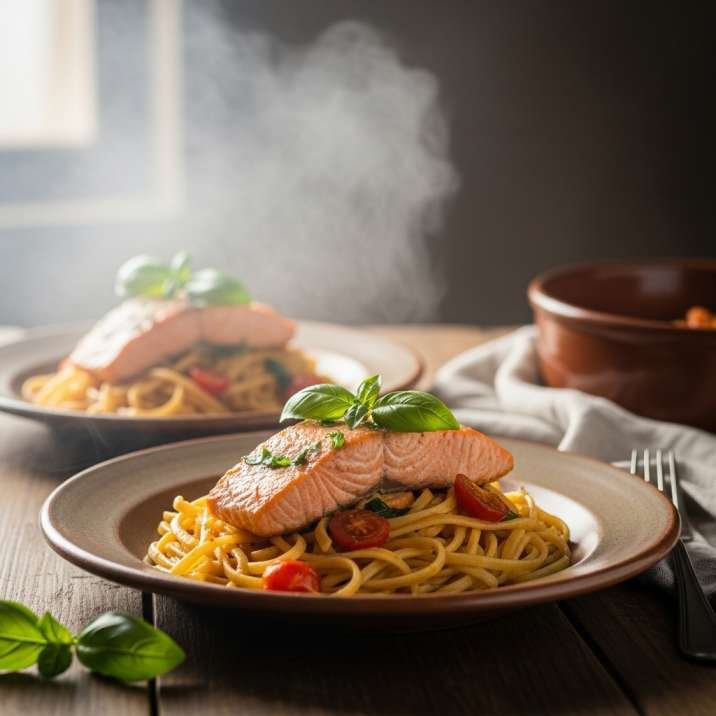
I’ve tested many versions of this dish over the years, and this salmon Tuscan pasta recipe is the one I trust most. It’s rich without being greasy, flavorful without being heavy, and simple enough for weeknights while still feeling special enough for guests.
If you enjoy pasta as much as I do, check out my other favourite twists, like Tagliatelle Pasta Recipe: A Fresh Italian Classic You Can Master at Home, for more Italian-inspired comfort food.
Why I Love Tuscan Pasta with Salmon
There’s something about salmon and cream sauce that works beautifully when cooked properly. Salmon adds natural richness, while garlic and Parmesan create depth. When I prepare Tuscan pasta with salmon, I always aim for:
- Moist, flaky salmon
- A smooth and balanced cream sauce
- Bright flavor from sun-dried tomatoes
- Fresh greens for contrast
This style of salmon pasta Tuscan keeps the dish exciting without overpowering the fish.
Table of Contents
Ingredients You’ll Need
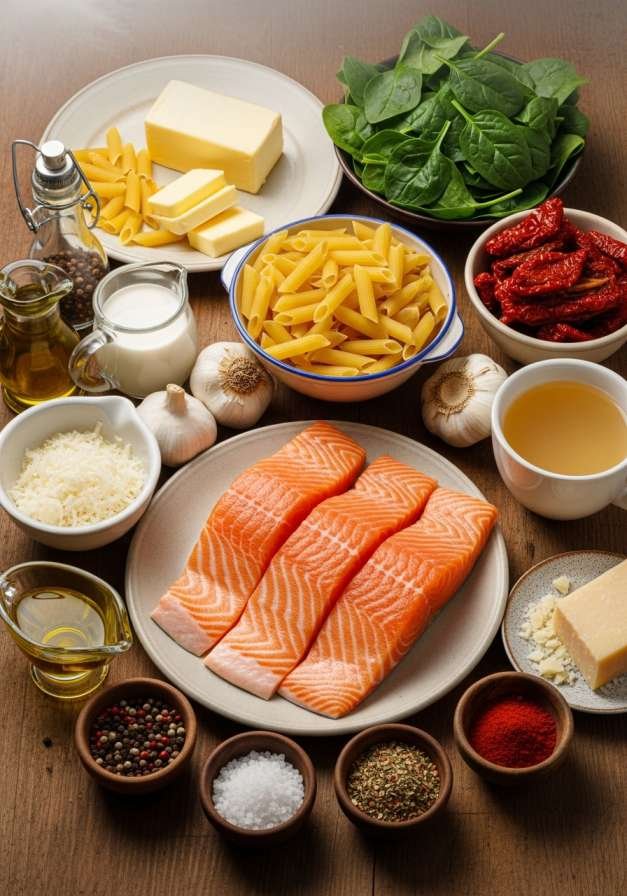
For the Salmon
- 4 salmon fillets (about 4–5 oz each)
- Salt and black pepper
- 1 teaspoon Italian seasoning
- 1 tablespoon olive oil
For the Pasta and Sauce
- 12 oz pasta (fettuccine, penne, or linguine)
- 3 tablespoons butter
- 4 cloves garlic, minced
- ¾ cup sun-dried tomatoes (oil-packed, drained)
- 1½ cups heavy cream
- ½ cup chicken broth
- ½ cup freshly grated Parmesan cheese
- 2 cups fresh spinach
- 1 teaspoon paprika
- ½ teaspoon red pepper flakes (optional)
- Salt and black pepper, to taste
This ingredient list keeps the dish authentic and balanced. I avoid unnecessary extras so the flavours stay clean and recognisable.
How I Cook the Salmon Safely
Cooking salmon correctly is essential for both flavour and food safety.
- I pat the salmon dry with paper towels.
- I season it with salt, pepper, and Italian seasoning.
- I heat olive oil in a skillet over medium-high heat.
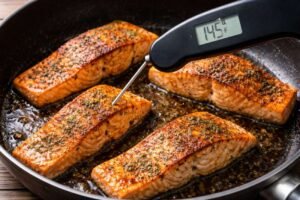
- I sear the salmon skin-side down for about 4 minutes, then flip and cook for 3 more minutes.
According to the USDA Food Safety and Inspection Service (FSIS), fish is safely cooked when it reaches an internal temperature of 145°F. I use a food thermometer to check doneness and remove the salmon once it reaches that temperature.
I let the salmon rest, then flake it into large pieces. Those chunks give this salmon Tuscan pasta recipe its signature texture.
Making the Creamy Tuscan Sauce
The sauce is where the dish comes together.
- In the same pan, I melt butter over medium heat.
- I add garlic and sauté for 30 seconds.
- Sun-dried tomatoes go in next.
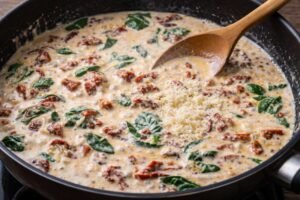
- I pour in chicken broth and heavy cream.
- I stir in Parmesan cheese and reduce heat to low.
Professional culinary practice (and food science guidance from Harold McGee’s On Food and Cooking) explains that dairy sauces should simmer gently, not boil, to prevent separation. This is why I keep the heat low once the cream is added.
This technique creates a smooth base for creamy Tuscan salmon pasta.
Combining Everything
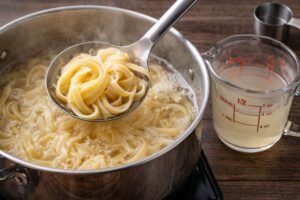
While the sauce simmers, I cook the pasta in salted boiling water until al dente. I reserve about ½ cup of pasta water before draining.
To assemble:
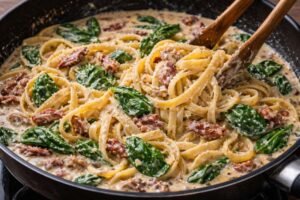
- Add cooked pasta to the sauce.
- Stir in spinach until wilted.
- Gently fold in the salmon.
- Adjust sauce thickness with pasta water.
This final step turns everything into a cohesive Tuscan pasta with salmon dish where every bite has balanced flavour.
Recipe Card: Tuscan Salmon Pasta
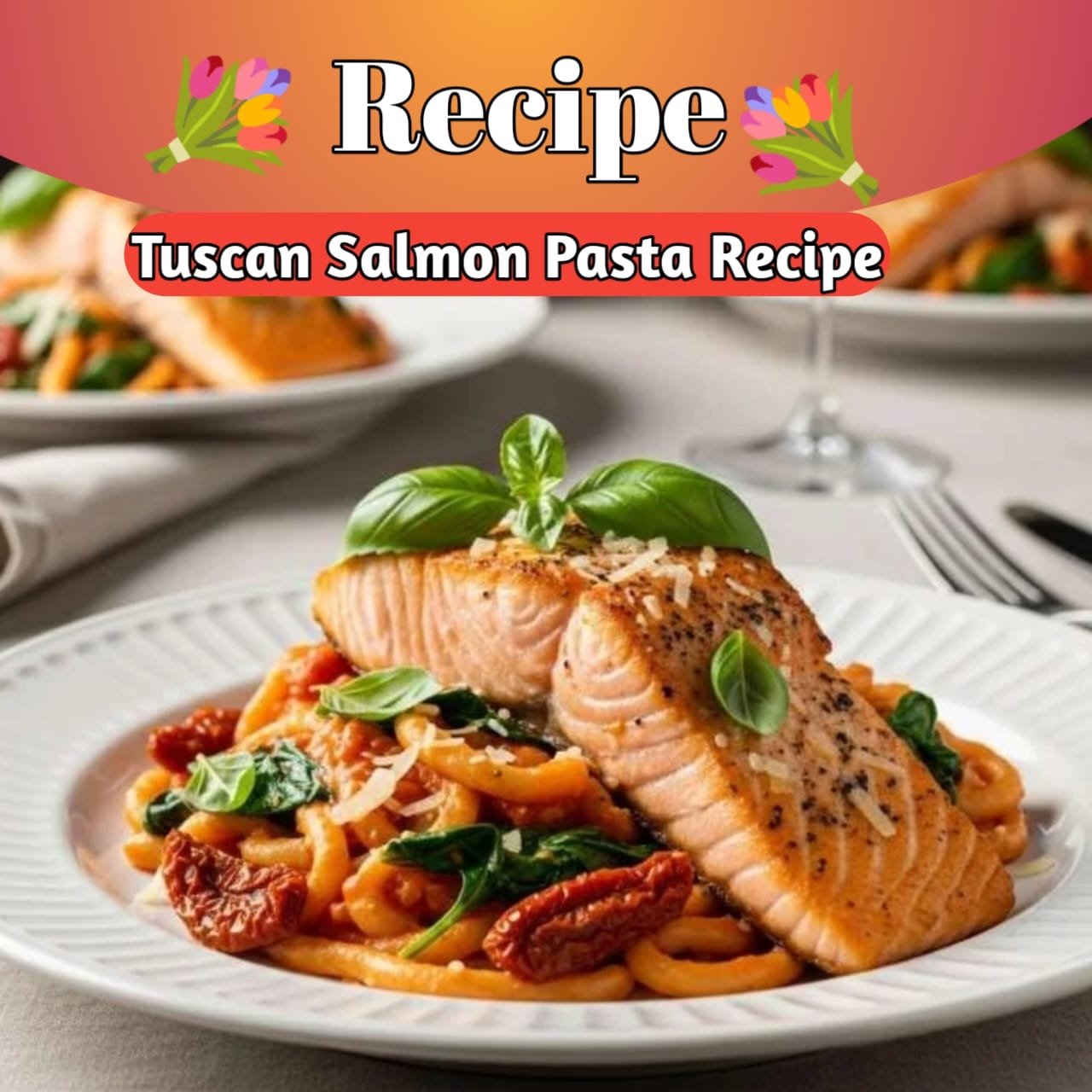

Tuscan Salmon Pasta
Ingredients
Equipment
Method
- Season and sear salmon until it reaches 145°F internally. Remove and flake.
- Cook pasta until al dente. Reserve ½ cup of pasta water.
- Melt butter and sauté garlic.
- Add sun-dried tomatoes, cream, broth, and Parmesan. Simmer gently.
- Stir in spinach and pasta.
- Add salmon and toss carefully.
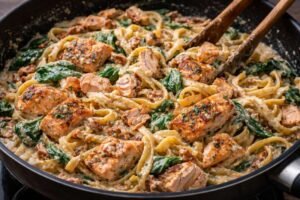
- Adjust consistency with pasta water.
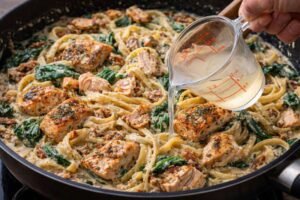
- Season and serve warm.
Notes
- This is a creamy, comforting pasta dish made with pan-seared salmon, garlic, sun-dried tomatoes, spinach, and Parmesan cheese.
- The sauce should be simmered gently, not boiled, to keep it smooth and stable.
- Best served fresh, but leftovers can be stored in the refrigerator for up to 2 days.
- Great for weeknight dinners or special occasions.
- Works well with fettuccine, penne, or linguine pasta.
Best Pasta for Salmon Tuscan Pasta
I recommend:
- Fettuccine – best for thick sauces
- Penne – traps sauce inside
- Linguine – lighter but sturdy
Thin pasta breaks easily and does not hold creamy sauce well.
Flavor Variations
You can customise Tuscan pasta with salmon easily:
- Add mushrooms
- Use shrimp with salmon.
- Add lemon zest
- Replace spinach with kale.
These changes keep the dish fresh without losing its character.
Storage and Reheating
I store leftovers in an airtight container for up to 2 days in the refrigerator.
For reheating:
- Use low heat
- Add a splash of milk or broth.
- Stir frequently
This keeps creamy Tuscan salmon pasta from separating.
Nutrition Notes (Evidence-Based)
This dish provides:
- Protein from salmon
- Carbohydrates from pasta
- Fat from cream and cheese
According to USDA FoodData Central, salmon naturally contains protein and fat, including omega-3 fatty acids. Spinach contributes fibre and micronutrients. I do not claim this is a low-calorie or weight-loss dish. It is comfort food meant to be enjoyed in balanced portions.
Nutrition Information (Per Serving)
| Nutrient | Amount |
|---|---|
| Calories | ~650 kcal |
| Protein | ~34 g |
| Total Fat | ~38 g |
| Saturated Fat | ~18 g |
| Carbohydrates | ~42 g |
| Dietary Fiber | ~3 g |
| Sugars | ~5 g |
| Cholesterol | ~110 mg |
| Sodium | ~720 mg |
Nutrition information is estimated using data from USDA FoodData Central and FDA nutrition labelling guidelines. Values may vary depending on ingredients and portion size. This information is not medical or dietary advice.
Common Mistakes to Avoid
From experience, I avoid:
- Overcooking salmon
- Boiling cream
- Oversalting before adding Parmesan
- Skipping pasta water
Avoiding these mistakes keeps your salmon pasta Tuscan smooth and flavorful.
Why This Dish Works for a USA Audience
In the U.S., home cooks love:
- Creamy pasta
- One-pan meals
- Seafood dinners
- Italian-American flavors
That makes Tuscan salmon pasta perfect for American kitchens.
Love pasta? Try Gochujang Shrimp Pasta: A Bold Fusion of Korean Heat and Italian Comfort. Next, it’s another seafood pasta favourite on FoodViebs.
My Personal Experience
I first made Tuscan pasta with salmon when I wanted something better than plain Alfredo but easier than baked pasta. After many trials, this version became my favourite.
Friends request it. Family asks for it on special nights. That tells me it works. When I eat this salmon Tuscan pasta recipe, I taste garlic, cheese, and salmon in every bite. It feels like restaurant food, but it’s made at home, and that’s exactly what I want from a great recipe.
Frequently Asked Questions
What do you serve with Tuscan salmon?
Serve Tuscan salmon with garlic bread, roasted vegetables, or a green salad to balance the rich, creamy sauce.
How long will salmon pasta keep in the fridge?
Salmon pasta keeps up to 2 days in the refrigerator at 40°F (4°C) or below when stored in an airtight container.
What is the traditional pasta in Tuscany?
Traditional Tuscan pastas are pici, pappardelle, and tagliatelle. Creamy salmon pasta is Tuscan-inspired, not traditional.
What is usually served with salmon?
Salmon is used in pasta dishes, baked fillets, salads, bowls, and tacos.
What meals can be made with salmon?
Salmon is used in pasta dishes, baked fillets, salads, bowls, and tacos.
What wine goes with Tuscan salmon?
Best wines: Pinot Grigio, Sauvignon Blanc, or lightly oaked Chardonnay.
How long can cooked salmon stay unrefrigerated?
Cooked salmon can stay out 2 hours at room temperature, or 1 hour above 90°F (32°C).
Sources and References
The cooking practices, safety temperatures, and nutrition logic used in this article are based on the following trusted authorities:
- USDA Food Safety and Inspection Service (FSIS)
Safe cooking temperature for fish (145°F)
https://www.fsis.usda.gov/food-safety - U.S. Food & Drug Administration (FDA) – Seafood Guidance
Seafood storage and handling
https://www.fda.gov/food/consumers/what-you-need-know-about-seafood - USDA FoodData Central
Nutrient profiles for salmon, spinach, cream, and pasta
https://fdc.nal.usda.gov - Harold McGee – On Food and Cooking
Cream sauce behavior and dairy heat control - Academy of Nutrition and Dietetics (USA)
Balanced meal structure and portion guidance
https://www.eatright.org
[…] you enjoy rich flavors like this, you can also try a creamy seafood pasta for a similar comforting […]