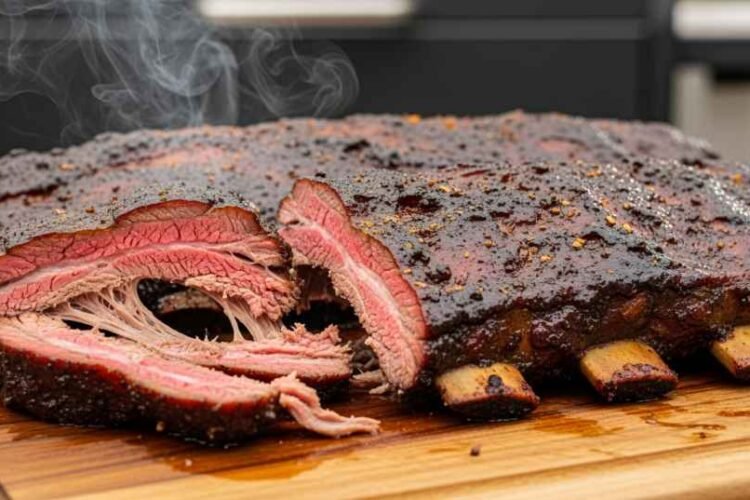
There’s something deeply satisfying about cooking a dino ribs recipe the right way. The first time I made these massive, meaty ribs, I honestly underestimated them. I treated them like regular beef ribs and paid the price with tough, chewy meat.
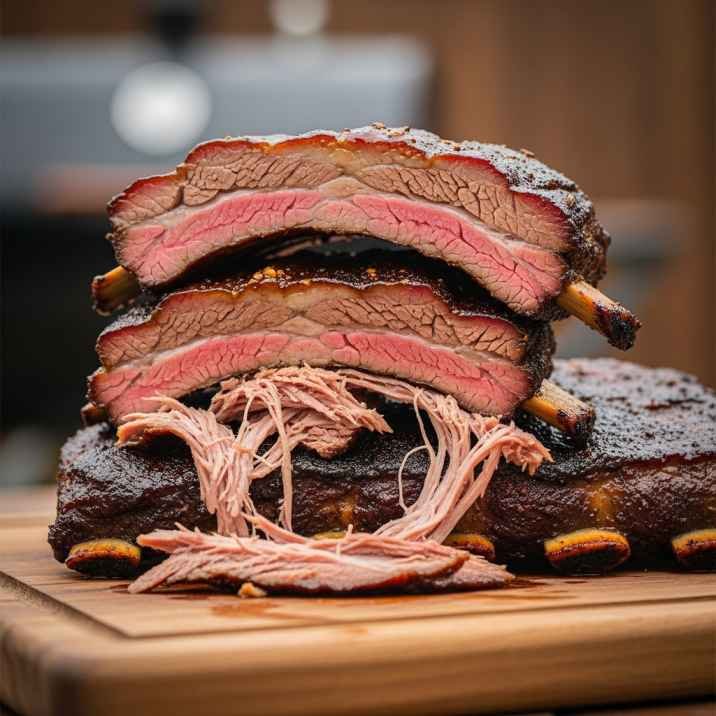
But after a few tweaks, some patience, and a lot of backyard testing, I finally nailed a smoked dino ribs recipe that delivers melt-in-your-mouth results every single time.
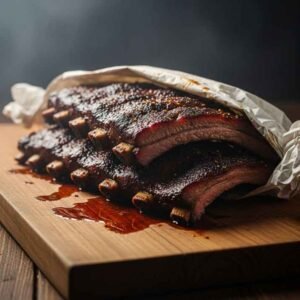
Today, I’m sharing my perfected method, including how I make this dino ribs recipe, Pit Boss style, with rich bark, deep smoke flavor, and tender, juicy meat that pulls clean off the bone.
What Are Dino Ribs?
Dino ribs, also known as beef plate ribs (cut from the lower rib section, typically ribs 6–8), are huge, thick, and packed with flavor. Unlike pork ribs, these are closer to brisket in texture and cooking style.
They’re called “dino ribs” for a reason: they’re massive, dramatic, and perfect for slow smoking.
Why I Love This Smoked Dino Ribs Recipe
I’ve cooked dozens of BBQ recipes, but this one stands out. I created this version after a road trip through Texas, where I tasted some of the best smoked beef ribs of my life.
Back home, I experimented using my pellet smoker and eventually landed on this dino ribs recipe, Pit Boss-inspired method. It’s simple, but every step matters.
Whenever I’m in the mood for grilling, I switch between these ribs and these juicy, smoky kababs for something equally flavorful.
What I love most:
- Deep smoky flavor without overpowering the meat
- Juicy, tender texture like brisket
- A bold bark that forms naturally
Ingredients You’ll Need
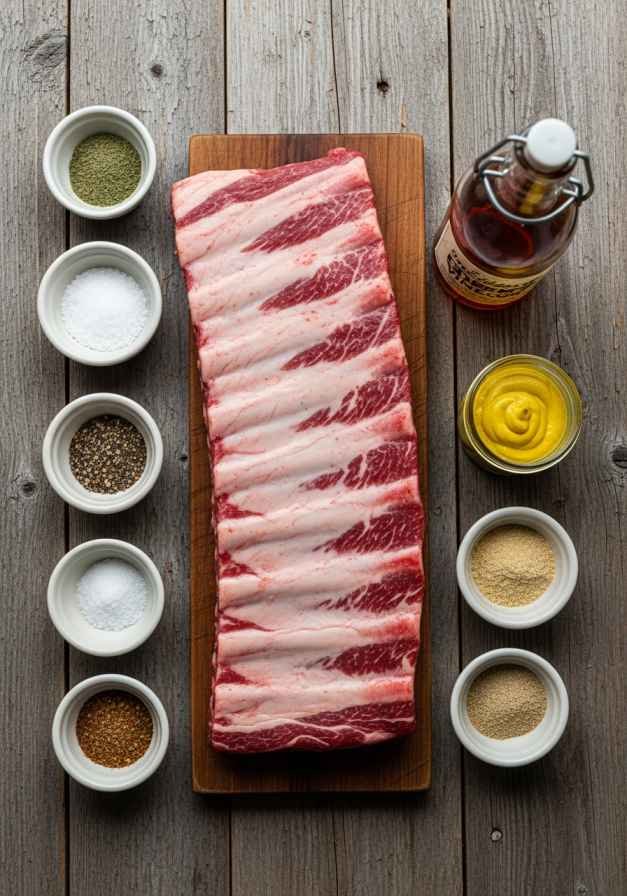
For the Ribs:
- 1 rack beef plate ribs (3–4 bones, about 6–8 lbs)
- 2 tbsp kosher salt
- 2 tbsp coarse black pepper
- 1 tbsp garlic powder
Optional:
- Mustard (as a binder)
- Apple cider vinegar (for spritzing)
I keep it simple because good beef doesn’t need much.
Equipment
- Pellet smoker (I use a Pit Boss, but any smoker works)
- Meat thermometer (essential for accuracy)
- Butcher paper or foil
- Spray bottle (for moisture)
Preparing the Dino Ribs
Trim the Ribs
Most dino ribs come with a fat cap. I trim it down slightly, but leave enough for flavor.
Tip: Remove the silver skin from the bone side if your butcher hasn’t done it. This helps seasoning penetrate better.
Season Generously
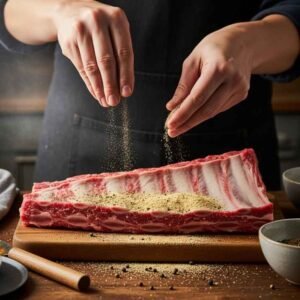
I lightly coat the ribs with mustard (optional), then apply salt, pepper, and garlic powder evenly.
Let them sit at room temperature for about 30–45 minutes.
How to Make Smoked Dino Ribs Recipe (Step-by-Step)
Step 1: Preheat Your Smoker
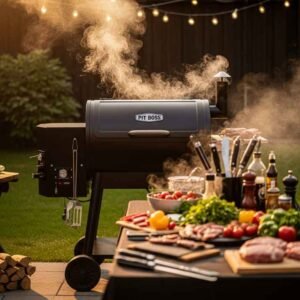
Set your pellet smoker (like a Pit Boss) to 225°F.
I keep my smoker at 225°F because low-and-slow cooking is the gold standard for tough cuts like beef ribs. This method also aligns with USDA grilling and smoking recommendations, which emphasize controlled temperatures for both safety and even cooking.
This low-and-slow temperature is key. According to standard BBQ practices followed by professional pitmasters, maintaining a steady low temperature ensures proper fat rendering and tender meat.
Step 2: Start Smoking
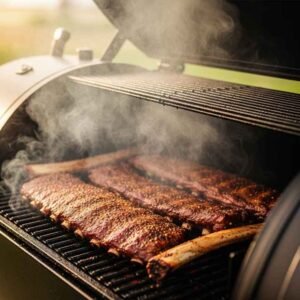
Place the ribs bone-side down on the smoker grates.
Let them smoke undisturbed for the first 3 hours.
After that:
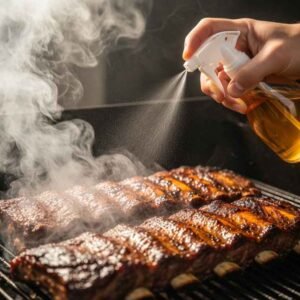
- Spritz lightly with apple cider vinegar every 45–60 minutes
- This keeps the surface moist and helps build a better bark.
Step 3: Monitor Internal Temperature
When I make this dino ribs recipe, I always rely on the temperature rather than guess. According to food safety guidelines from the United States Department of Agriculture (USDA), whole cuts of beef should reach a minimum safe internal temperature of 145°F with proper resting.
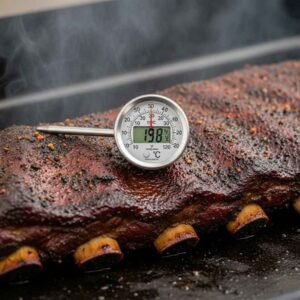
However, for a smoked dino ribs recipe, pitmasters cook them much longer, usually until 200–205°F, so the connective tissue fully breaks down and the meat becomes tender.
This is where most beginners mess up. I did too.
Don’t cook by time. Cook by temperature.
Once the ribs hit around 165–170°F internal temp, the bark should be well formed.
Step 4: Wrap (Optional but Recommended)
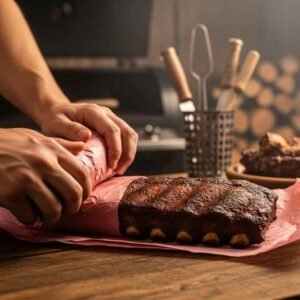
Wrap the ribs in butcher paper to retain moisture.
This step helped me fix my early mistakes where the ribs dried out before becoming tender.
Step 5: Continue Cooking
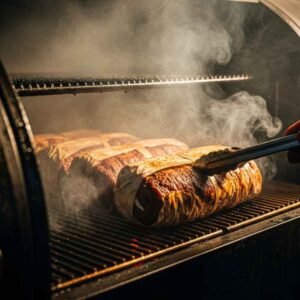
Increase smoker temperature slightly to 250°F.
Cook until internal temp reaches 200–205°F.
At this stage, the meat should feel probe tender like butter.
Step 6: Rest the Ribs
Remove from the smoker and let them rest for at least 30–45 minutes.
Resting the ribs is not just a BBQ trick; it’s actually backed by food safety guidance. The United States Department of Agriculture (USDA) recommends allowing meat to rest after cooking, which helps retain juices and ensures even temperature distribution throughout the meat.
This step is critical. Resting allows juices to redistribute, which is a standard recommendation in meat cooking practices.
My Personal Mistakes (And How I Fixed Them)
I’ll be honest, my first few attempts at this smoked dino ribs recipe were far from perfect.
Here’s what went wrong:
- Mistake 1: Cooking too fast
I tried 275°F from the start, result: tough ribs
Fixed by lowering to 225°F - Mistake 2: Skipping rest time
I cut too early and lost all the juices
Now I always rest for at least 30 minutes - Mistake 3: Over-seasoning
Too many spices masked the beef flavor
Switched to simple salt & pepper
Flavor Tips From My Kitchen
- Use oak or hickory pellets for authentic BBQ flavor.
- Avoid sugary rubs; they burn during long cooks.
- Keep the smoker closed as much as possible.
Serving Suggestions
I love serving these ribs with:
- Creamy mashed potatoes
- Classic coleslaw
- Pickles and onions
If you’re building a full BBQ platter, I like pairing these ribs with this Hawaiian-style chicken dish for a mix of bold and sweet flavors.
For a Texas-style experience, keep it simple and let the meat shine.
Storage and Reheating
Storage:
- Store leftovers in an airtight container.
- Refrigerate for up to 3–4 days.
Reheating:
- Wrap in foil and heat at 250°F oven until warm
- Add a splash of broth to prevent drying
Estimated Cost (USA)
- Beef plate ribs (6–8 lbs): $45–$80 depending on quality
- Seasoning & extras: $5–$10
Total cost: Around $50–$90
Feeds 4–6 people generously
Why This Dino Ribs Recipe Works
This method follows proven BBQ principles:
- Low and slow cooking (225–250°F)
- Cooking to internal temp, not time
- Proper resting for juicy results
These techniques are widely used by professional pitmasters and align with safe cooking practices recommended by food safety authorities.
Nutrition (Approx per serving)
- Calories: 650–800 kcal
- Protein: 45–55g
- Fat: 50–60g
- Carbohydrates: 1–3g
(Values are estimates based on standard USDA beef rib data)
Dino Ribs Recipe (Recipe Card)
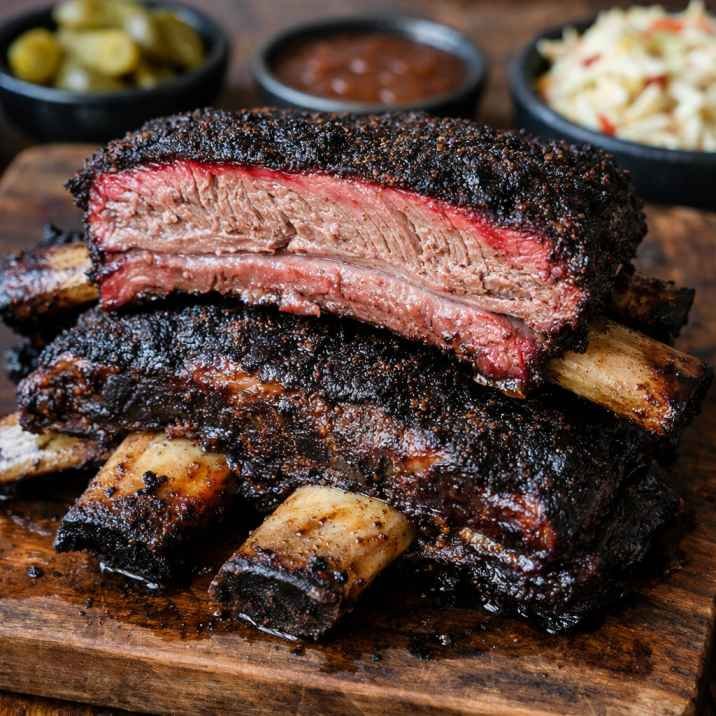

Best Dino Ribs Recipe – Smoky, Juicy & Easy BBQ
Ingredients
Equipment
Method
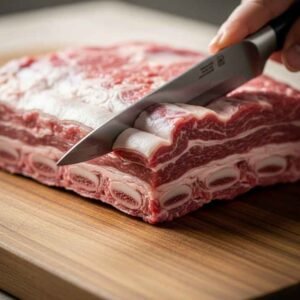
- Trim excess fat, leaving a thin layer for flavor. Remove silver skin from the bone side if needed.

- Apply mustard as a binder (optional). Season evenly with salt, pepper, and garlic powder. Let it rest for 30–45 minutes.
- Set your Pit Boss pellet smoker to 225°F and allow it to fully preheat.
- Place ribs bone-side down on the smoker. Smoke for 3 hours without opening the lid.
- After 3 hours, spritz with apple cider vinegar every 45–60 minutes to keep the ribs moist
- Cook until internal temperature reaches 165–170°F and bark is well formed.
- Wrap ribs in butcher paper or foil to lock in moisture.
- Increase the temperature to 250°F and cook until the internal temperature reaches 200–205°F.
- Remove ribs and let them rest for 30–45 minutes before slicing.
Notes
- Always cook by internal temperature, not time
- Ideal doneness: probe tender (like soft butter)
- Use oak or hickory pellets for the best flavor
- Avoid sugary rubs, they may burn during long smoking
- Cooking at high temperature → tough meat
- Skipping resting time → dry ribs
- Over-seasoning → hides natural beef flavor
- Refrigerate in an airtight container for up to 4 days
FAQ
What is the best way to cook dino ribs?
The best way to cook dino ribs is low and slow smoking at 225°F–250°F until the internal temperature reaches 200–205°F. According to the United States Department of Agriculture, beef is safe at 145°F, but tougher cuts like ribs are cooked longer to break down connective tissue and become tender.
What is the difference between beef ribs and dino ribs?
Dino ribs are a specific type of beef ribs called beef plate ribs, which are larger, thicker, and meatier than regular beef back ribs. Back ribs come from the ribeye section and have less meat, while dino ribs come from the plate section and are known for their size and richness.
How long for dino ribs at 225?
Dino ribs take about 6 to 8 hours at 225°F, depending on their size. However, cooking time can vary, so they are done when the internal temperature reaches 200–205°F, and the meat becomes probe tender.
What is another name for dino ribs?
Another name for dino ribs is beef plate ribs or plate short ribs. The term “dino ribs” is a nickname used because of their large size.
Can you marinate dino ribs?
Yes, dino ribs can be marinated, but it is not necessary because the meat already has a strong natural flavor. Most BBQ methods use a simple salt and pepper rub. According to the United States Department of Agriculture, marination should always be done in the refrigerator to ensure food safety.
Final Thoughts (From My Kitchen to Yours)
This dino ribs recipe, Pit Boss style, has become one of my signature dishes. It reminds me of that Texas trip every time I make it, but more importantly, it reflects all the trial and error I went through to perfect it.
What started as a tough, disappointing cook turned into one of my proudest recipes.
If you follow this smoked dino ribs recipe, take your time, trust the process, and don’t rush the rest, you’ll end up with something truly special.
And once you get it right… There’s no going back to regular ribs.
References
- USDA Food Safety and Inspection Service
- USDA Safe Minimum Temperature Chart
- USDA Grilling and Smoking Guidelines
Vicky is the founder and recipe creator of FoodViebs, a food blog dedicated to sharing simple, delicious, and home-style recipes. With a strong passion for cooking and experimenting in the kitchen, Vicky creates easy-to-follow recipes using everyday ingredients that anyone can cook with confidence.
Every recipe on FoodViebs is personally tested and written with clear, step-by-step instructions to help home cooks achieve perfect results. Vicky believes that homemade food is healthier, tastier, and brings families closer together.
Through FoodViebs, Vicky aims to inspire people to enjoy cooking, explore new flavors, and prepare restaurant-style dishes at home with ease.