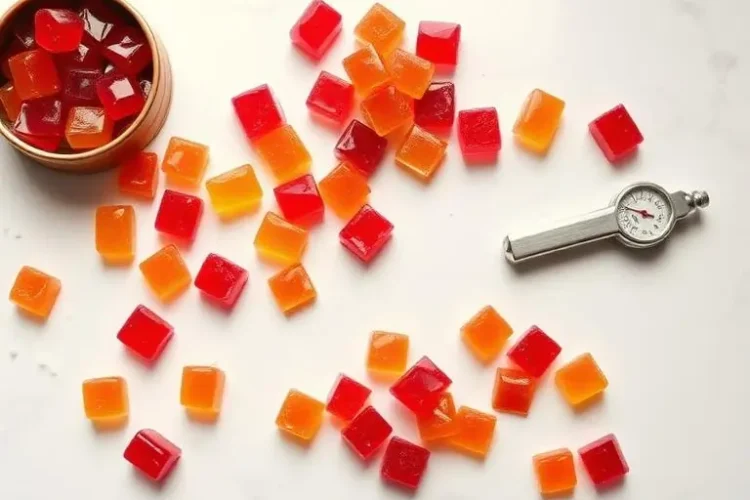

- Prep Time: 10 minutes
- Cook Time: 25 minutes
- Total Time: 35 minutes
- Servings: 40 pieces
- Course: Candy & Confectionery
- Cuisine: American
- Diet: Dairy-free option (use clarified butter)
- Method: Stovetop · hard crack stage boiling
- Difficulty: Intermediate thermometer required
- Serving Size: 1 piece (~½ tsp candy mixture)
- Storage: Airtight container · up to 3 weeks
- Key Technique: Hard crack stage · 300°F–310°F
- Flavors Available: Peppermint · Cherry · Orange · Cinnamon · Sour
- Calories: ~45 kcal per piece
- Author: Vicky Sharma
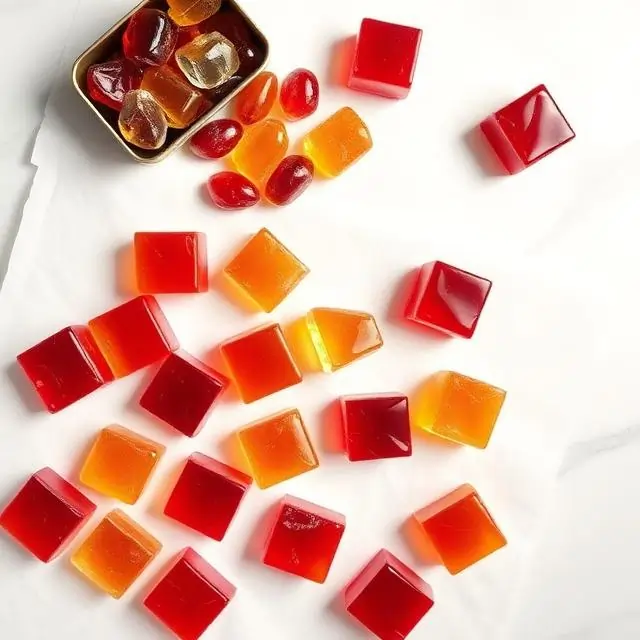

Cannabutter Hard Candy Recipe
Ingredients
Equipment
Method
- Step 2: Dust silicone molds with powdered sugar. Set out the extract, coloring, and thermometer within arm's reach before heating anything.
- In a heavy-bottomed saucepan, gently stir together sugar, corn syrup, and water until combined. Clip the candy thermometer to the pan.
- Heat on medium-high, do not stir once boiling. Brush down the sugar crystals from the sides of the pan with a wet pastry brush. Cook until thermometer reads 300°F–310°F (149°C–154°C). This takes 15–20 minutes.
- Remove from heat at 300°F. Wait 45 seconds, then add cannabutter. Stir quickly and thoroughly until fully incorporated. The mixture will bubble. This is normal.
- Working fast, stir in the extract and gel food coloring until fully blended.
- Carefully ladle the mixture into the prepared silicone moulds. Work quickly; it sets in under 2 minutes.
- Let rest at room temperature for 30 minutes minimum. Do not refrigerate. Pop out of molds and dust lightly with powdered sugar if tacky.
Notes
-
The thermometer is non-negotiable. Calibrate in boiling water first should read 212°F at sea level. Adjust for altitude.
-
Avoid humidity. Make this on dry days only. Humidity causes finished candy to become sticky and melt.
-
The 45-second rest matters. Adding butter immediately to 300°F sugar causes separation. Always wait after removing from the heat.
-
Do not substitute coconut oil. This recipe is calibrated for cannabutter; only different fat content changes the texture.
-
Dose responsibly. Potency varies by batch. Test one piece, wait 2 hours before consuming more.
I’ll be honest, the first time I tried making a cannabutter hard candy recipe, I ended up with a pan full of warm, chewy taffy that refused to set, a burned finger, and a kitchen that smelled like a cannabis dispensary for three days. That was about six years ago, and I’ve come a long way since then.
These days, my homemade weed candy is something I’m genuinely proud of. My guests always ask for the recipe, and I always hesitate, not because I want to keep it a secret, but because the details actually matter here. A lot. So I decided it was finally time to write everything down properly.
Whether you’re new to cannabis-infused cooking or you’ve tried a cannabis hard candy recipe before and ended up with the same sticky disaster I did, this guide will walk you through every step. I’m talking real temperatures, real timing, and the real mistakes I made so you don’t have to.
Legal Notice: Cannabis laws vary widely by state and country. Before making any THC-infused candy or infused hard candy recipe at home, please verify that cannabis use is legal in your jurisdiction. This recipe is intended for adults of legal age only. Always label homemade cannabis edibles clearly and store them safely away from children and pets.
Why I Got Obsessed With THC Hard Candy
A few years back, I spent a week in a mountain cabin with a group of friends.
One of them was a brilliant woman who spent decades as a pastry chef, pulled out a tin of gorgeous ruby-red hard candies she’d made herself.
They were infused, carefully dosed, and absolutely delicious. She handed me one and said, “Candy is the most underrated edible format.
She was right. Hard candy is discreet, shelf-stable, easy to dose, and when done well, genuinely beautiful. After that trip, I became a little obsessed.
I started researching, testing, failing, and eventually succeeding. This recipe is the result of that journey, and it carries a little piece of that cabin trip in every batch.
What You Need Before You Start
Ingredients
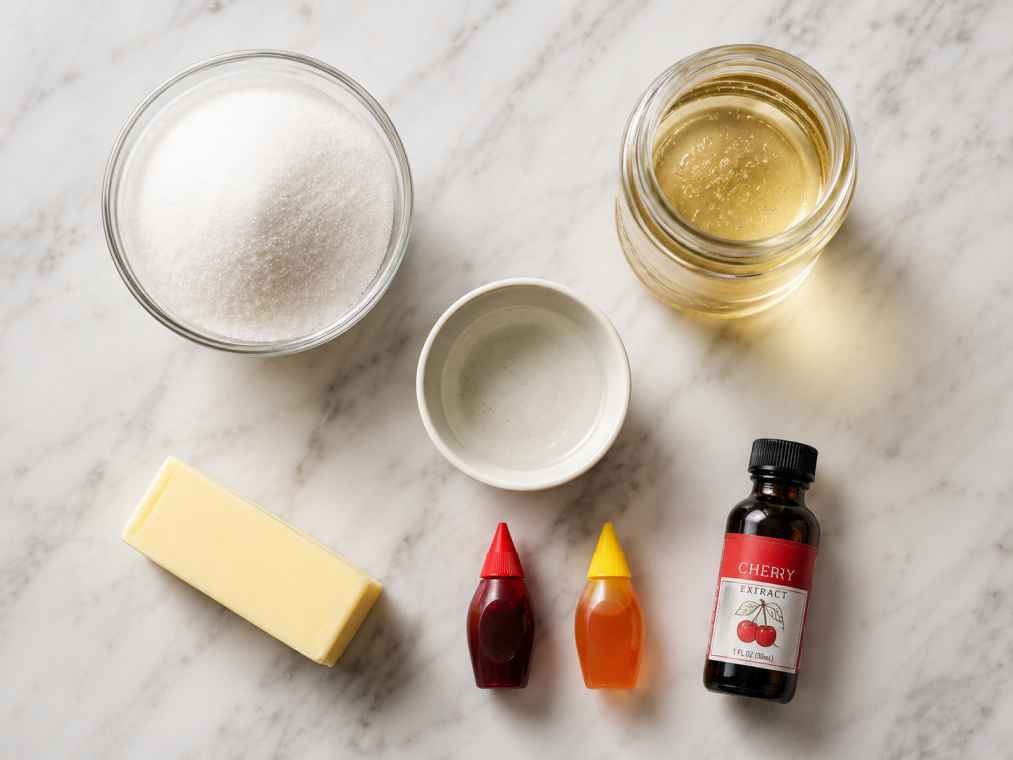
- ½ cup cannabutter (homemade or store-bought, fully clarified)
- 2 cups granulated white sugar
- ⅔ cup light corn syrup
- ½ cup water
- 1 teaspoon flavored extract (peppermint, cherry, orange, your choice)
- Gel food coloring (optional, but makes a big visual difference)
- Powdered sugar or cornstarch for dusting molds
Equipment
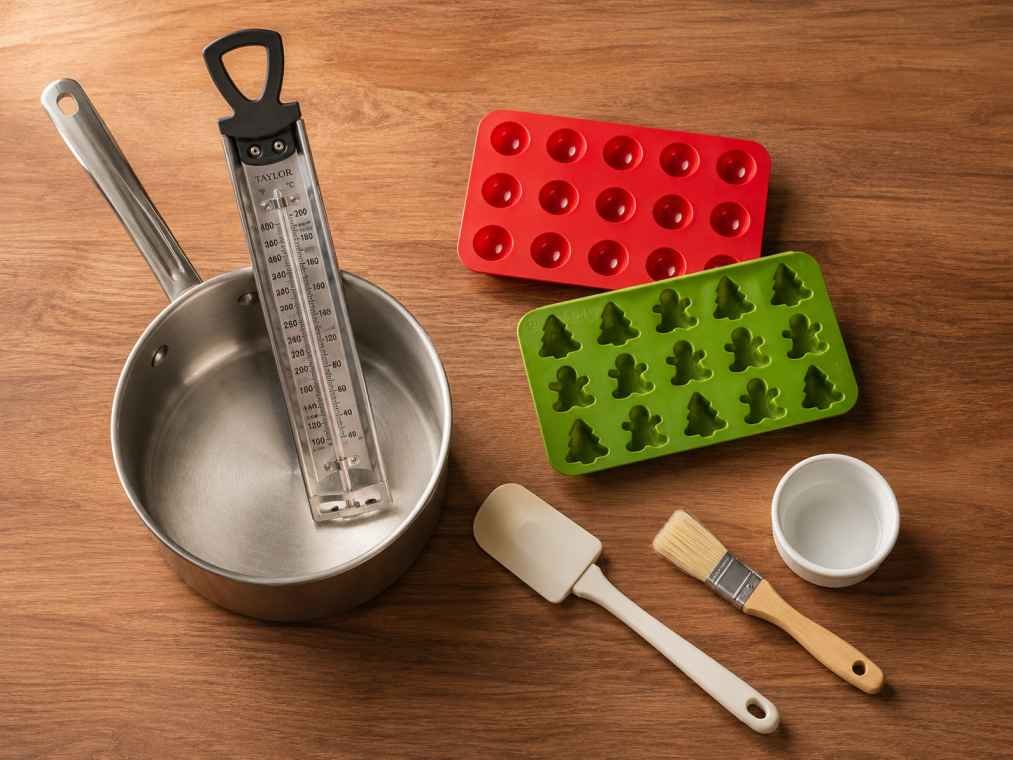
- Heavy-bottomed saucepan (at least 3-quart capacity)
- Candy thermometer (this is non-negotiable, more on that below)
- Silicone candy molds or a greased baking sheet
- Heat-resistant spatula
- Pastry brush and small bowl of water
The Most Important Tool: Your Candy Thermometer
I cannot overstate this. Before I owned a reliable candy thermometer, every batch I made was a gamble. Hard candy depends entirely on temperature.
You’re not just cooking sugar, you’re changing its molecular structure, and each stage produces a completely different texture.
For this infused hard candy recipe, we’re aiming for the hard crack stage, which sits between 300°F and 310°F (149°C–154°C). Below that, you’ll get taffy or brittle.
Above it, you’ll get burnt sugar that tastes bitter and can be dangerous to handle.
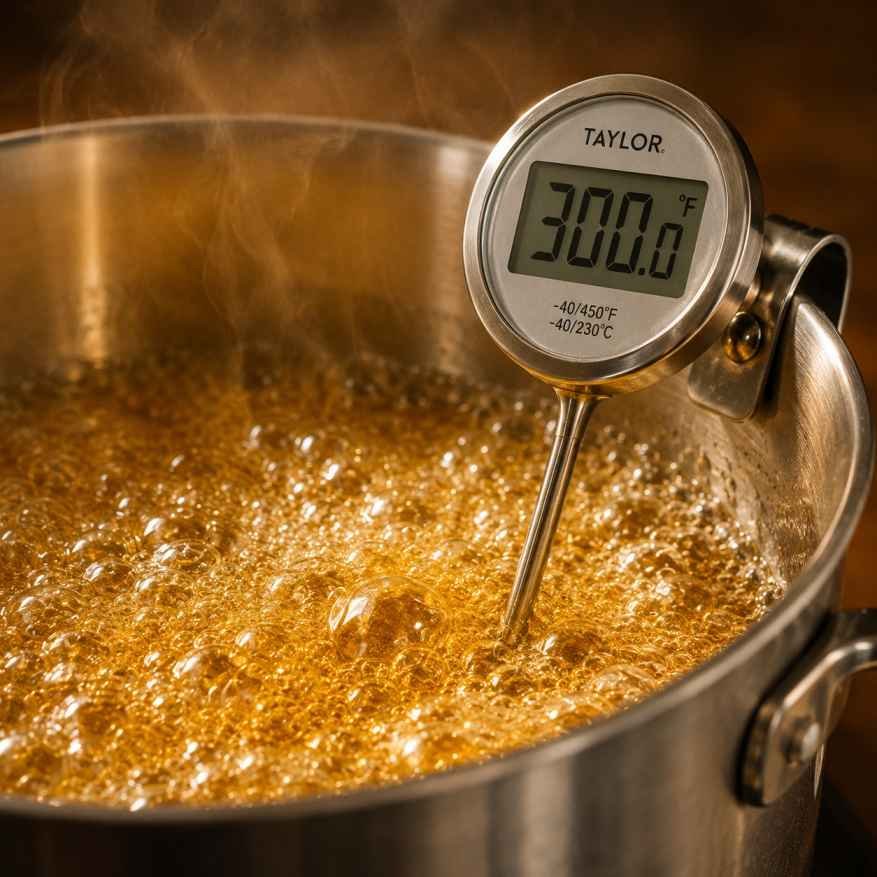
A digital instant-read candy thermometer or a clip-on probe thermometer works best. Calibrate it before you start by testing in boiling water; it should read 212°F (100°C) at sea level.
If you’re at altitude, adjust accordingly; water boils at a lower temperature the higher you go.
How to Make Cannabutter Hard Candy: Step-by-Step
Step 1: Prepare Your Workspace
Before you heat a single thing, get everything ready. Lightly dust your silicone molds with powdered sugar or a very thin coat of neutral oil.
Lay out your flavor extract, food coloring, and thermometer within arm’s reach. Once the sugar hits temperature, you’ll have maybe 60–90 seconds to work before it starts to set.
Step 2: Combine the Base Ingredients
In your heavy-bottomed saucepan, combine the granulated sugar, corn syrup, and water. Stir gently just to combine; you want everything dissolved before it hits the heat.
Drop your candy thermometer into the pan now so it acclimates slowly.
Step 3: Cook to the Hard Crack Stage
Turn your heat to medium-high. From this point forward, do not stir. Stirring after the sugar starts cooking causes crystallization, and crystallization turns your candy grainy and cloudy.
If sugar crystals form on the sides of the pan, brush them down with a pastry brush dipped in cold water.
Watch your thermometer carefully. The temperature will climb slowly at first, then accelerate. You’ll pass through the soft ball stage, the firm ball stage, and the soft crack stage.
Don’t pull it yet. Keep going until your thermometer reads 300°F–310°F (149°C–154°C). That’s the hard crack stage, and that’s your target.
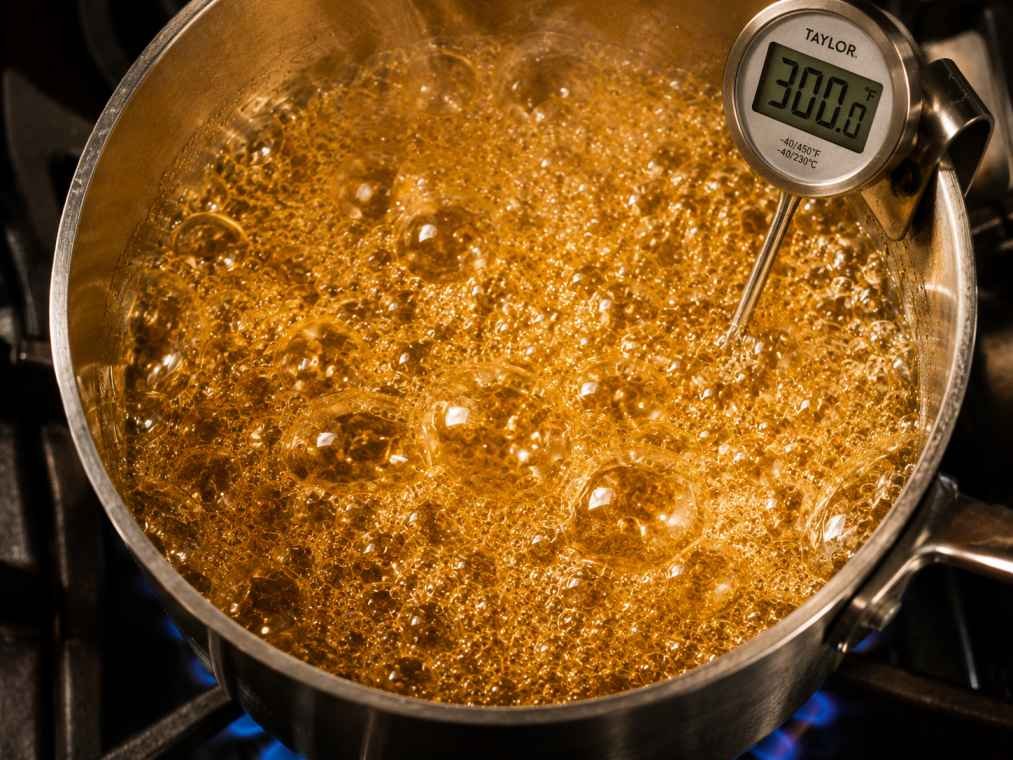
This whole process typically takes 15–20 minutes, depending on your stove and pan.
Step 4: Add the Cannabutter
Here’s where the cannabutter hard candy recipe diverges from a standard hard candy process, and where a lot of people go wrong, including me.
Remove the pan from the heat the instant you hit 300°F. Wait exactly 45 seconds before adding your cannabutter.
This is important: if you add butter to sugar at full temperature, it can cause violent bubbling and uneven mixing.
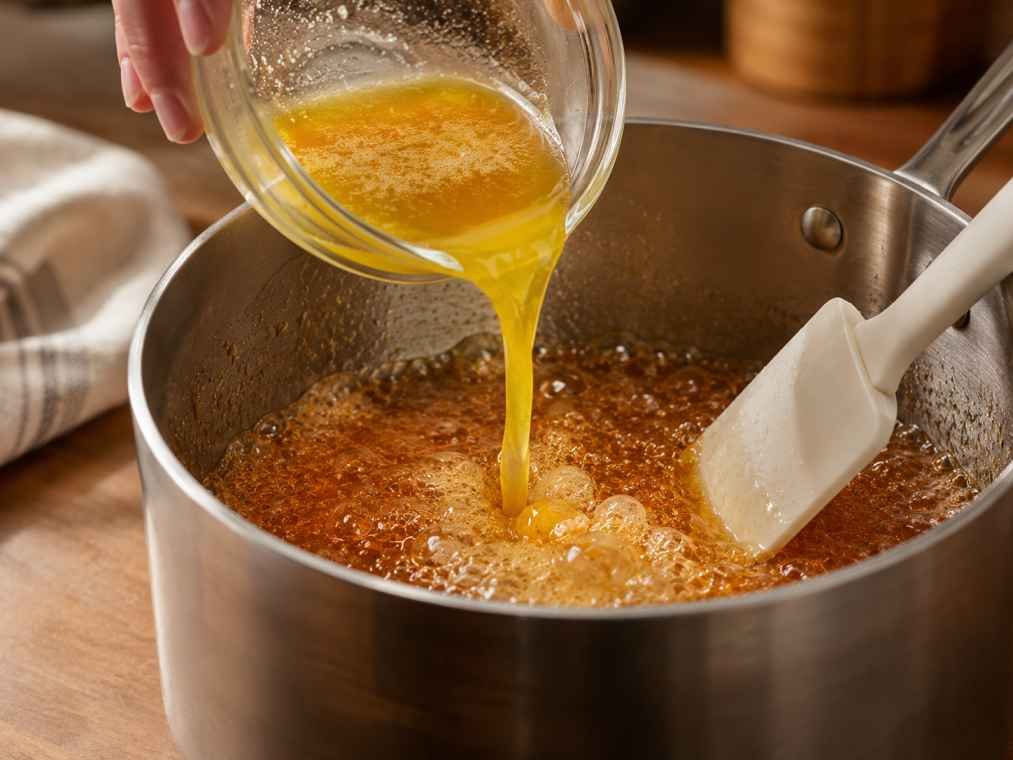
After the brief rest, add the cannabutter and stir quickly but thoroughly. The mixture will bubble; that’s normal. Keep stirring until it’s fully incorporated and smooth.
Step 5: Add Flavor and Color
Working fast, add your extract and a few drops of gel food coloring. If you’ve ever worked with gel coloring in other sweet recipes before, you already know it disperses far better than liquid dye, and the same rule applies here. Stir to combine.
Step 6: Pour Into Molds
Carefully pour or ladle the hot candy mixture into your prepared molds. Work quickly, it sets fast.
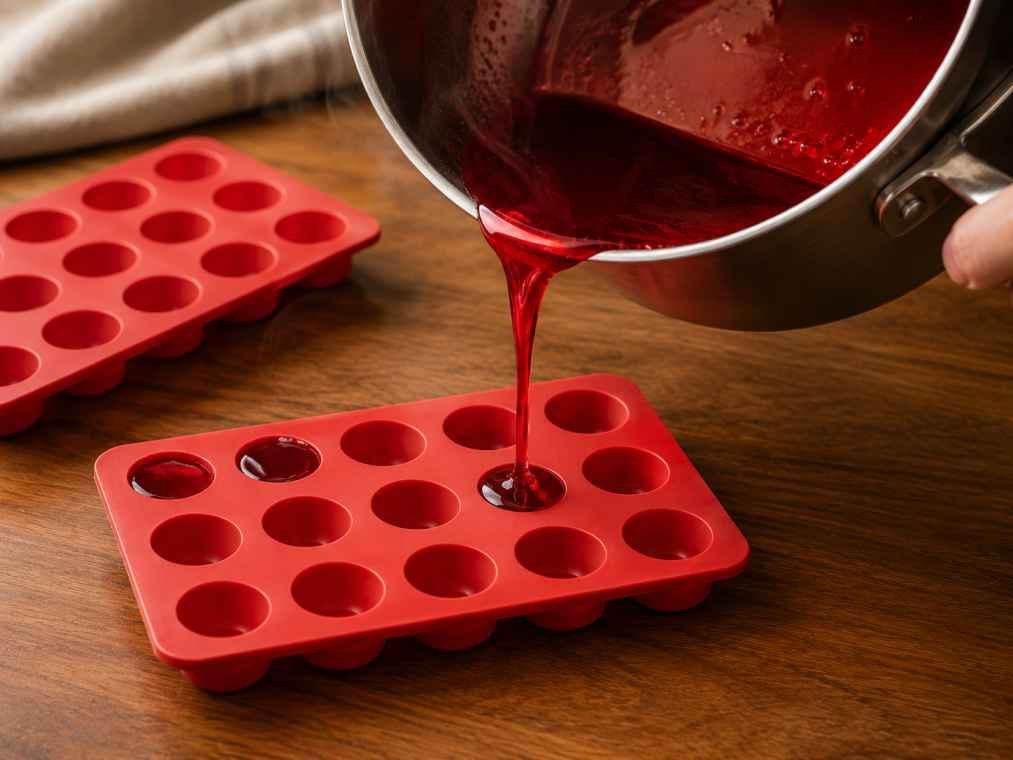
If you’re using a greased baking sheet instead of molds, pour it in a thin, even layer and score it with a sharp knife after about 2 minutes, before it fully hardens.
Step 7: Cool and Unmold
Let your candy sit at room temperature for at least 30 minutes before attempting to unmold.
Don’t rush this; in the refrigerator, temperature shock can cause condensation, which makes hard candy sticky and cloudy.
Once fully set, pop them out of the molds. Dust lightly with powdered sugar if they feel tacky, and store in an airtight container with parchment between layers.
Common Mistakes I Made (And How I Fixed Them)
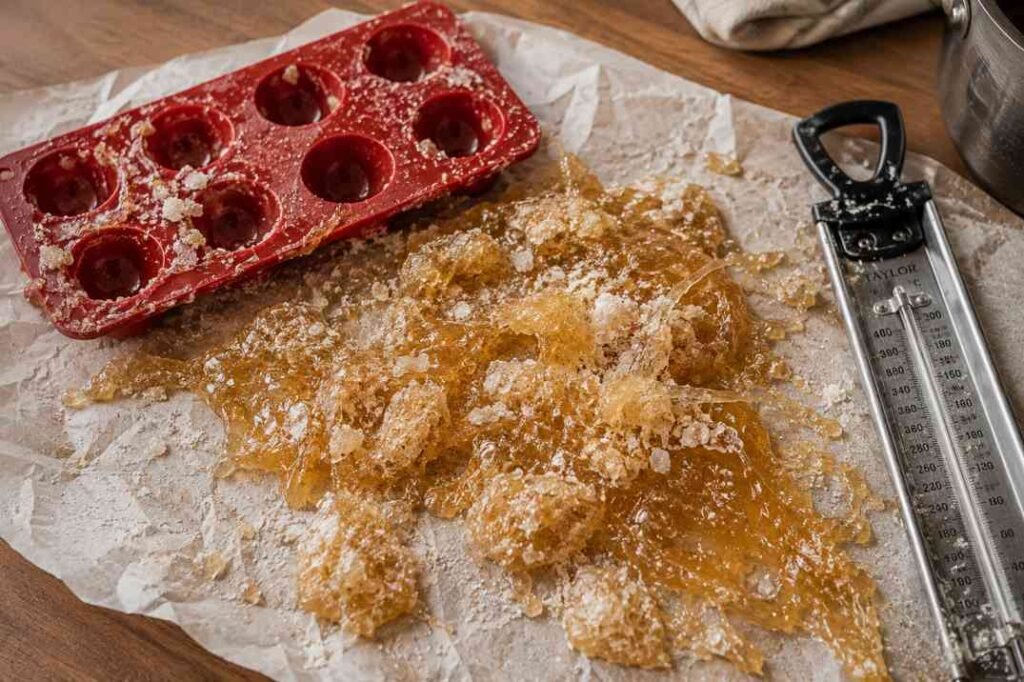
Mistake 1: Adding butter too early.
My first failed batches had the butter going in right off the heat, which caused it to separate and pool on top. The 45-second rest rule fixed this entirely.
Mistake 2: Skipping the thermometer.
I once tried to use the “cold water test” instead of a proper thermometer. The hard crack stage is too precise for guesswork.
I pulled the batch too early, and the candy never set. Always use a thermometer.
Mistake 3: Humidity.
Hard candy and humidity are enemies. I learned this the hard way on a rainy August afternoon when my beautiful candies turned into a sticky, melted puddle by dinnertime.
Now I only make this recipe on dry days, and I store finished candy with a small food-safe silica gel packet in the container.
Mistake 4: Using infused coconut oil instead of cannabutter.
The fat content and water content are different, which throws off the texture. This recipe is specifically developed for cannabutter stick with it.
A Note on Dosing
I want to be straightforward here: calculating the potency of homemade cannabis edibles is genuinely difficult without lab testing.
The THC content of homemade cannabutter varies significantly based on the cannabis strain, the fat-to-flower ratio used, and the decarboxylation process.
What I do is make a small test batch first, consume one candy, wait for full hours, and assess the effect before eating more.
If you want to understand the broader regulatory landscape around cannabis edibles, the The FDA’s guidelines on cannabis-derived products are worth reading before you begin.
I also make my candies in a consistent size, typically about ½ teaspoon of mixture per mould, so each piece has roughly the same amount of cannabutter in it.
If you’re sharing these with others, always label them clearly as cannabis-infused edibles and communicate the approximate potency honestly.
Never serve infused hard candy to anyone without their knowledge and consent.
Storage Tips for Homemade Weed Candy
Properly made homemade weed candy stores well for 2–3 weeks at room temperature in an airtight container, as long as conditions stay dry and cool.

Avoid the refrigerator, which introduces moisture. The freezer works well for longer storage, just thaw at room temperature, keeping the container sealed to prevent condensation.
Label your container clearly. I use a small printed label with the date, approximate dose per piece, and a clear “cannabis-infused” warning. This isn’t just courtesy, it’s an essential safety practice.
Flavor Variations I Love
Once you have the base cannabis hard candy recipe down, the flavor possibilities open up significantly:
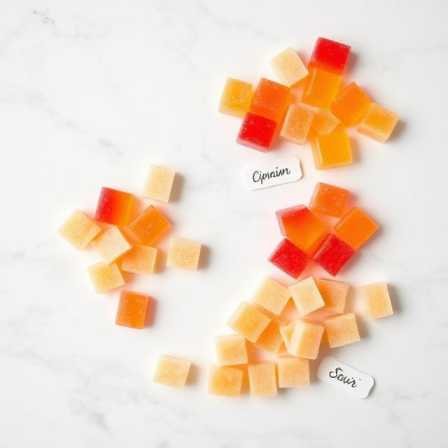
- Cinnamon heat: Use cinnamon oil (not extract) and a deep red color. Intense and warming.
- Citrus blend: Combine orange and lemon extracts for a bright, refreshing flavor.
- Peppermint classic: The most forgiving flavor for masking any grassy cannabis notes.
- Sour coating: After the candy fully sets, dust with a mix of citric acid and powdered sugar for a sour punch.
FAQs
How strong is cannabutter candy?
Cannabutter candy strength depends on the THC content in the cannabutter and the serving size. For beginners, 5–10 mg THC per candy is considered a low dose. Effects from edibles can take 30 minutes to 2 hours to appear and may last several hours. The CDC warns that people often overconsume because they do not feel the effects immediately.
Source: CDC Cannabis Edibles Guidance
Can you use honey instead of corn syrup?
Yes, honey can replace corn syrup in hard candy recipes, but the texture may change. Corn syrup helps prevent sugar crystallization and keeps hard candy smooth. Honey contains water and natural sugars, which can make candy softer or stickier if temperatures are not controlled carefully.
How to store cannabis candy
Store cannabis candy in an airtight container in a cool, dry place away from sunlight and humidity. Refrigeration can extend shelf life. Always label THC edibles clearly and keep them away from children and pets because THC candies can look like regular candy.
Source: FDA THC Edible Safety Warning
Can hard candy burn THC?
Yes, excessive heat can degrade THC potency. THC is sensitive to prolonged high temperatures, which is why many cannabis candy recipes add cannabis ingredients near the end of cooking. Proper temperature control helps preserve potency.
Best molds for hard candy
Silicone candy molds are considered the best option for cannabis hard candy because they are heat-resistant, flexible, non-stick, and help create evenly sized candies for more consistent dosing.
Can beginners make hard candy?
Yes, beginners can make hard candy successfully if they use a candy thermometer and follow the recipe carefully. The most important factors are controlling temperature, preventing sugar crystallization, and measuring THC doses accurately. Public health guidance recommends starting with low THC doses in homemade edibles.
Final Thoughts From My Kitchen
Learning how to make cannabutter hard candy properly took me years of trial, error, sticky fingers, and ruined batches.
But the result, a beautiful, consistent, shelf-stable edible that you made entirely from scratch, is genuinely worth the effort.
The key principles I keep coming back to: use a reliable candy thermometer, respect the hard crack stage, give your cannabutter a moment before adding it to hot sugar, and always, always work in low humidity. Get those four things right, and the rest follows.
This recipe sits at the intersection of classical confectionery technique and responsible home cannabis cooking.
If you enjoy making things completely from scratch, the way I do, browse some of the other from-scratch baking recipes on the blog.
The same patience and attention to detail that make this candy Work will serve you just as well there.
Happy cooking, and as always, be safe, be responsible, and enjoy every piece.