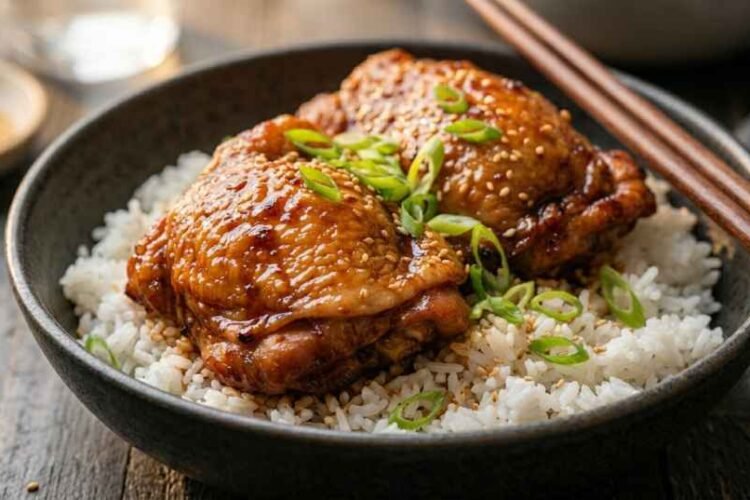
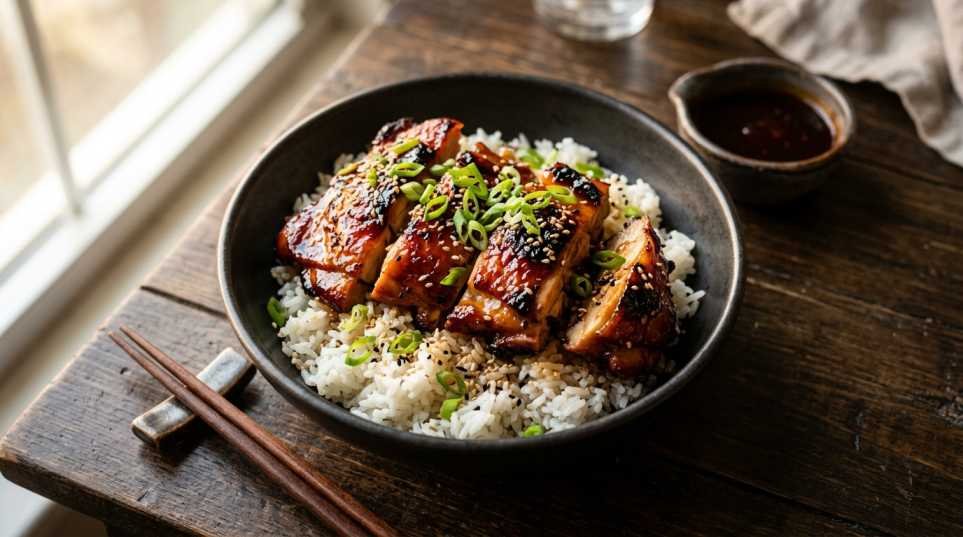
There’s a moment in every cook’s life when a single bite changes everything. For me, that moment happened in a tiny Cantonese BBQ shop tucked into a side street in San Francisco’s Chinatown. I was 26, I’d just graduated from culinary school, and I stood there with a piece of lacquered, caramelized char siu chicken dripping down my fingers, completely speechless. That one bite is exactly what inspired this Lee Kum Kee char siu chicken recipe, and honestly, it has never left my kitchen since.
I’ve spent the better part of a decade chasing that flavour at home. And after many messy, sticky, wonderfully delicious experiments, I finally cracked it using Lee Kum Kee char siu sauce as my secret weapon.
This is my go-to char siu chicken recipe, and I’m sharing everything: the marinade, the technique, the mistakes I made along the way, and exactly how to fix them.
Table of Contents
What Is Char Siu, and Why Chicken?
Char siu (叉燒) is a style of Cantonese BBQ traditionally made with pork. The name literally translates to “fork roasted,” referring to the skewers used in classic preparation. But over the years, home cooks and chefs alike have applied the same iconic marinade to chicken, and honestly, it works beautifully.
Baked char siu chicken is deeply savory, slightly sweet, wonderfully sticky, and carries that signature reddish-amber glaze that makes Cantonese BBQ so visually irresistible. It’s weeknight-friendly, endlessly crowd-pleasing, and incredibly forgiving once you understand the method.
Why I Use Lee Kum Kee Char Siu Sauce
I want to be upfront: you can make char siu sauce entirely from scratch. But after years of testing, I keep coming back to Lee Kum Kee char siu sauce as my base. Lee Kum Kee is one of the most respected names in Chinese pantry sauces, founded in 1888 in Guangdong Province, they’ve been producing authentic Cantonese condiments for over a century. Their char siu sauce contains fermented red bean curd, hoisin, Chinese five spice, and maltose, which creates that depth of flavor that’s genuinely difficult to replicate from scratch on a busy weeknight.
I use it as a foundation and then build on it. That’s the approach I recommend.
The Char Siu Marinade (My Version)
This char siu marinade is what I’ve refined over countless batches. It enhances the Lee Kum Kee base with a few additions that take the flavor deeper.
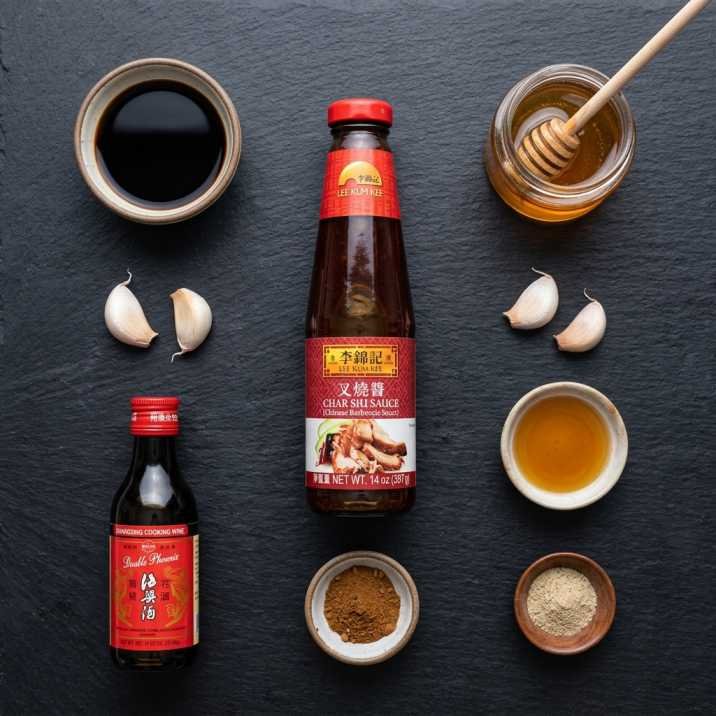
You’ll need:
- 4 tablespoons Lee Kum Kee char siu sauce
- 1 tablespoon soy sauce (low-sodium preferred)
- 1 tablespoon Shaoxing rice wine (or dry sherry)
- 1 tablespoon honey
- 1 teaspoon sesame oil
- ½ teaspoon Chinese five-spice powder
- 2 cloves garlic, minced
- ½ teaspoon white pepper
Whisk everything together until smooth. The honey adds extra gloss and caramelization in the oven. The five-spice deepens that signature warm, anise-forward aroma that defines Cantonese BBQ chicken.

Lee Kum Kee Char Siu Chicken
Ingredients
Equipment
Method
- Whisk together the Lee Kum Kee char siu sauce, soy sauce, Shaoxing rice wine, honey, sesame oil, Chinese five-spice powder, minced garlic, and white pepper in a bowl until fully combined and smooth.
- Score each chicken thigh 2 to 3 times across the thickest part using a sharp knife. Coat the chicken thoroughly in the char siu marinade, making sure it gets into every score mark. Cover and refrigerate for a minimum of 4 hours. Overnight gives the deepest flavour.
- Remove the chicken from the refrigerator 30 minutes before cooking. This ensures even cooking throughout and prevents a cold center.
- Preheat your oven to 375°F (190°C). Line a rimmed baking sheet with foil and place a wire rack on top. Arrange the marinated chicken thighs skin-side up on the rack with at least 1 inch of space between each piece. Do not skip the wire rack.
- Roast in the preheated oven for 30 to 35 minutes until the internal temperature reaches 165°F (74°C)when checked with an instant-read thermometer at the thickest part of the thigh, away from the bone.
- Mix 1 tablespoon of Lee Kum Kee char siu sauce with 1 teaspoon of honey. Brush generously over the chicken skin. Return to the oven for 5 more minutes.
- Switch the oven to broil on high. Broil for 3 to 5minutes, watching closely, until the glaze caramelises and the edges char slightly. Do not walk away, it burns fast.
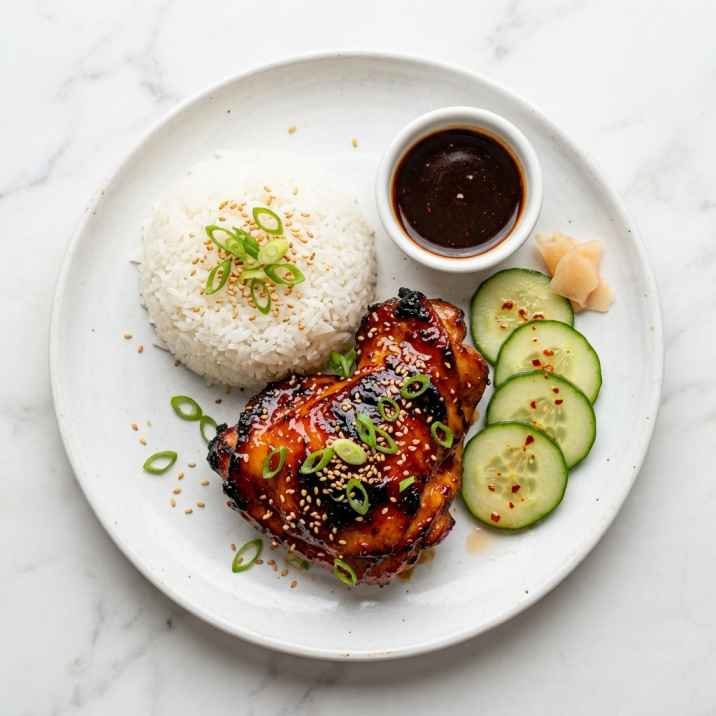
- Remove from the oven and rest for 5 minutes before serving. Plate over steamed jasmine rice, garnish with sliced scallions and toasted sesame seeds, and serve with a simple cucumber salad dressed in rice vinegar and a pinch of sugar.
Notes
significant difference in flavor depth. 4 hours is
the minimum. Do not rush this step. Cut choice: Bone-in, skin-on chicken thighs give
the best result. Boneless thighs work too but reduce
cook time by 8 to 10 minutes. Chicken breasts are
not recommended, as they dry out under the broiler. Wire rack is non-negotiable: Roasting directly on
the tray traps steam and prevents caramelization on
the underside of the chicken. Spacing matters: Overcrowded pieces steam instead
of roasting. Keep at least 1 inch between each thigh. Broiler watch: The glaze goes from perfect to
burnt in under 60 seconds. Stay at the oven during
the broiler step. Storage: Leftovers keep well in an airtight
container in the refrigerator for up to 3 days.
Reheat in the oven at 350°F (175°C) for 10 minutes
to preserve the glaze texture. Avoid microwave
reheating, as it softens the skin. Safe cooking temperature: Always verify the
internal temperature reaches 165°F (74°C) following
USDA poultry safety guidelines before serving.
Choosing Your Cut: Why I Almost Always Use Thighs
Here’s an opinion I hold strongly: char siu chicken thighs are the right call, almost every time.
Chicken thighs have more fat than breasts, which means they stay moist through the high heat and caramelization process. They also have more connective tissue, which breaks down into a rich, gelatinous flavor during roasting. Chicken breasts are leaner and dry out faster, especially when finished under a broiler, which is essential for that charred, sticky glaze. If you love cooking with thighs as much as I do, my crispy pan seared chicken thighs are another weeknight recipe worth keeping in your back pocket.
Bone-in, skin-on thighs give you the best result. Boneless thighs work too and cook faster. Skin-on is preferred because the fat renders and crisps under the broiler, creating that lacquered outer layer.
I rarely use breasts for this recipe. If you insist, reduce the cook time by about 10 minutes and watch them closely.
How to Make Homemade Lee Kum Kee Char Siu Chicken (Step-by-Step)
This homemade char siu chicken recipe is built around an oven method that’s reliable, accessible, and genuinely delicious. No speciality equipment required.
Step 1: Marinate (Don’t Skip This)
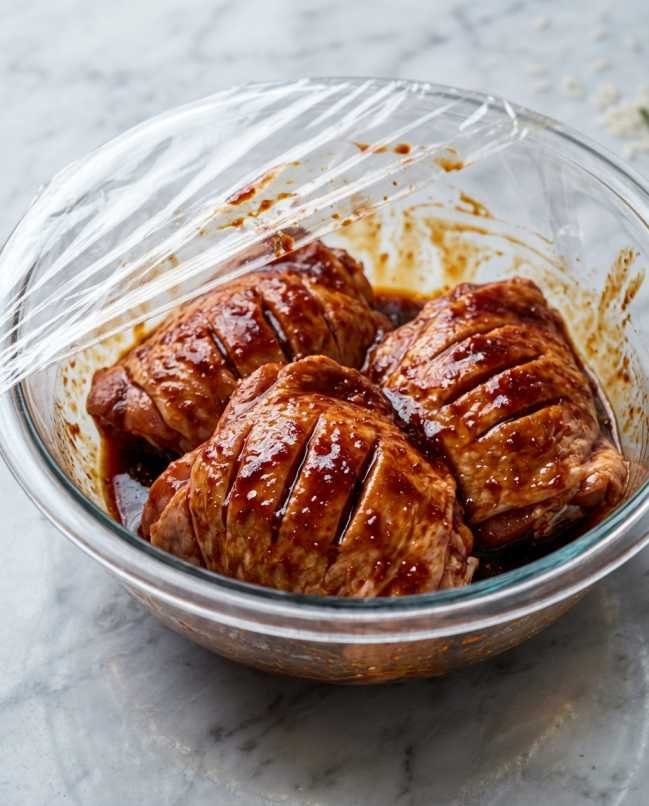
Score your chicken thighs 2–3 times on the thickest part. This helps the marinade penetrate deeper and prevents the outside from over-caramelizing before the interior cooks through.
Coat the chicken thoroughly in your char siu marinade, making sure it gets into the scores. Cover and refrigerate for at least 4 hours, or overnight, is significantly better. I’ve done both. Overnight wins every time.
Step 2: Bring to Room Temperature
About 30 minutes before cooking, pull the chicken out of the fridge. Cold chicken going straight into a hot oven creates uneven cooking. This small step makes a real difference.
Step 3: Oven-Roast Low and Slow First
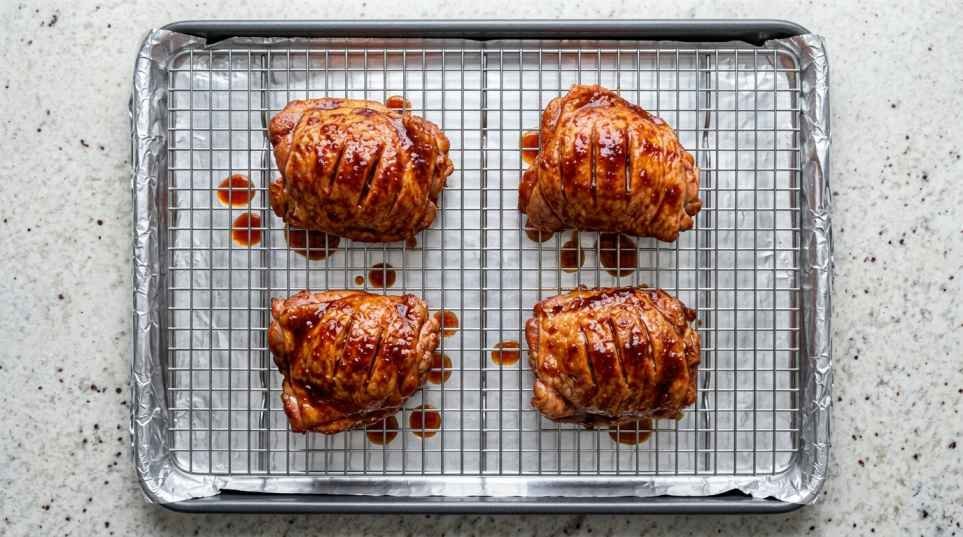
Preheat your oven to 375°F (190°C). Line a baking sheet with foil and place a wire rack on top. This is important. Elevating the chicken lets heat circulate underneath and prevents the bottom from steaming in its own juices.
Place the chicken skin-side up on the rack. Roast for 30–35 minutes until the internal temperature reaches the USDA-recommended safe internal temperature of 165°F for poultry. Use an instant-read thermometer. Don’t guess.
Step 4: The Glaze Finish (This Is Where the Magic Happens)
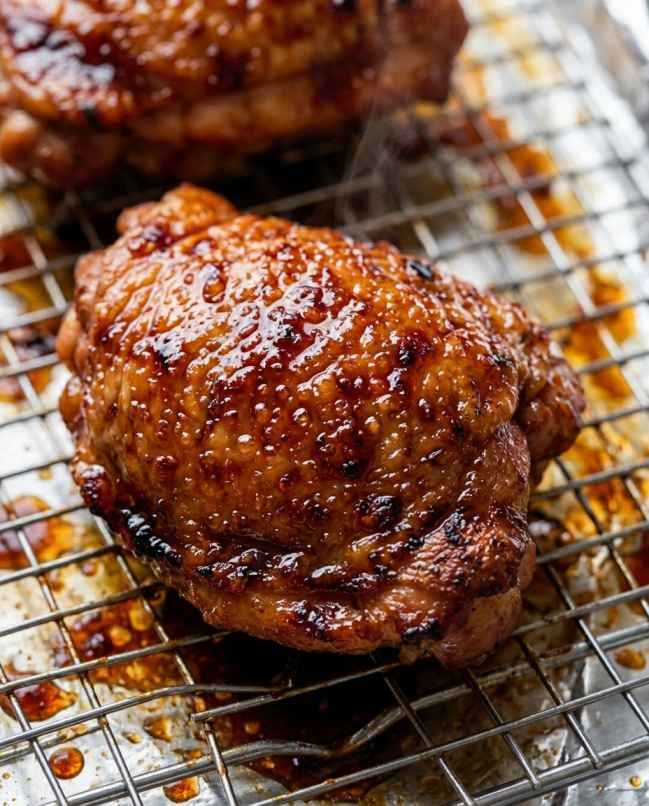
About 10 minutes before the chicken is done, brush on an additional layer of char siu sauce mixed with a teaspoon of honey. Return to the oven for 5 more minutes.
Then switch to the broiler on high. Broil for 3–5 minutes, watching closely. You want the sauce to caramelize and char slightly at the edges; that’s the authentic Chinese BBQ chicken look and flavor. Don’t walk away. It goes from perfectly glazed to burnt in under a minute.
The Mistakes I Made (So You Don’t Have To)
Mistake 1: Not marinating long enough. My first attempt was marinated for 45 minutes. The flavour was pleasant only on the surface, one-dimensional. Four hours minimum. Please.
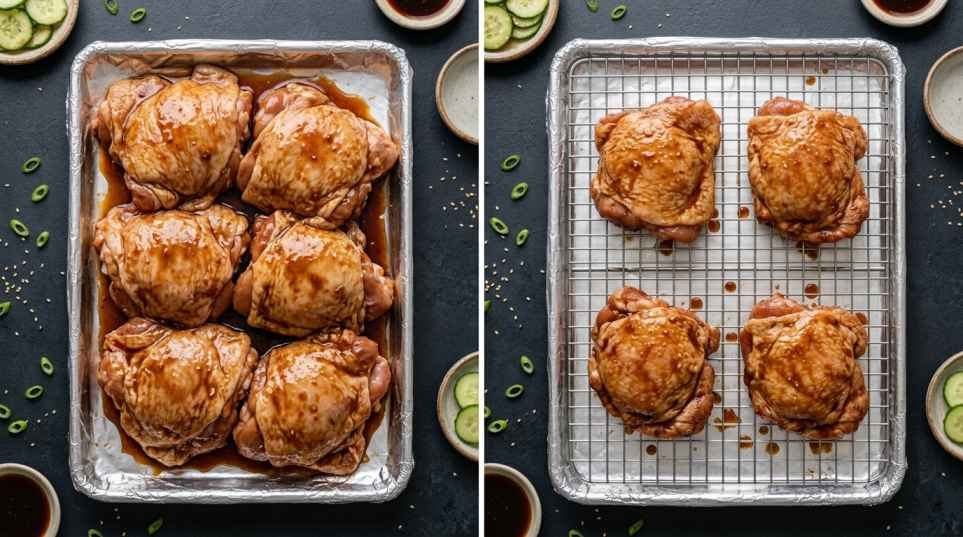
Mistake 2: Skipping the wire rack. I once roasted directly on a foil-lined pan and ended up with a beautiful top but a soggy, pale underside. Always use a rack.
Mistake 3: Broiling too early. I used to add the glaze and go straight to the broiler without the initial roast. The outside charred before the inside cooked through. Finish roasting first, then broil.
Mistake 4: Overcrowding the pan. Chicken pieces too close together trap steam and prevent caramelization. Give each piece at least an inch of space.
Serving My Sticky Chinese Chicken
This sticky Chinese chicken is incredibly versatile. If you’re already a fan of bold, sticky Asian glazes, my sticky glazed Asian chicken wings follow the same flavor philosophy and are just as addictive straight from the oven.
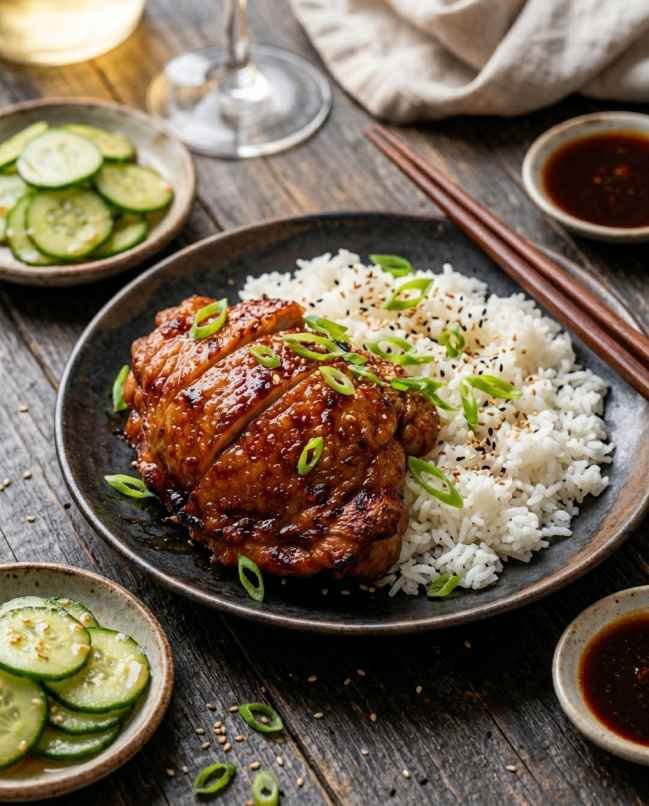
- Over steamed jasmine rice with a drizzle of the pan drippings, this is the classic, and it’s perfect.
- Sliced thin over wonton noodle soup for a weekend project meal.
- In lettuce cups with hoisin, cucumber, and scallions for a lighter option.
- Cold, straight from the fridge the next morning. I won’t apologize for this.
Garnish with thinly sliced scallions and toasted sesame seeds. A quick cucumber salad dressed in rice vinegar and a pinch of sugar is the ideal side; the acidity cuts through the richness of the glaze beautifully.
A Note on Nutrition
I want to be responsible here. I’m not going to throw out random health claims about this dish. What I can tell you, based on general USDA data: a bone-in, skin-on chicken thigh (roughly 110g raw) contains approximately 200–240 calories, 16–18g of protein, and 14–16g of fat before the marinade. The char siu sauce adds sugar and sodium, so if you’re monitoring sodium intake, use the sauce in moderation and choose a low-sodium soy sauce. For precise dietary needs, I always recommend consulting a registered dietitian.
Why This Recipe Stays on My Table
Every time I make this oven-baked char siu chicken, I think of that San Francisco afternoon, the fog rolling down the street, the smell of roasting lacquered meat, a paper napkin entirely insufficient for the situation.
Cooking is memory. It’s the reason we go back to the same recipes again and again. This dish, built on a foundation of Lee Kum Kee char siu sauce and refined over years of happy mistakes, has become one of my most-requested recipes. My partner asks for it on birthdays. My friends text me asking for the recipe after dinner parties. My neighbor once knocked on the door mid-cook because the smell coming through the window was, in her words, “absolutely criminal.”
That’s the highest compliment a recipe can earn.
Make it once, and you’ll understand.
This recipe has been tested multiple times in a home kitchen to ensure reliable, consistent results. Safe cooking temperatures follow USDA poultry guidelines, which recommend a minimum internal temperature of 165°F (74°C) for all poultry. Any Nutritional estimates referenced in this post are based on general USDA food composition data and should be treated as approximate. For specific dietary needs, please consult a registered dietitian.