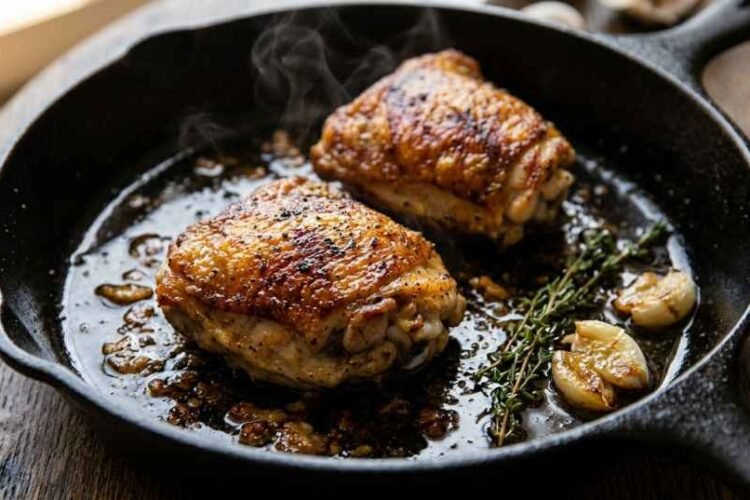
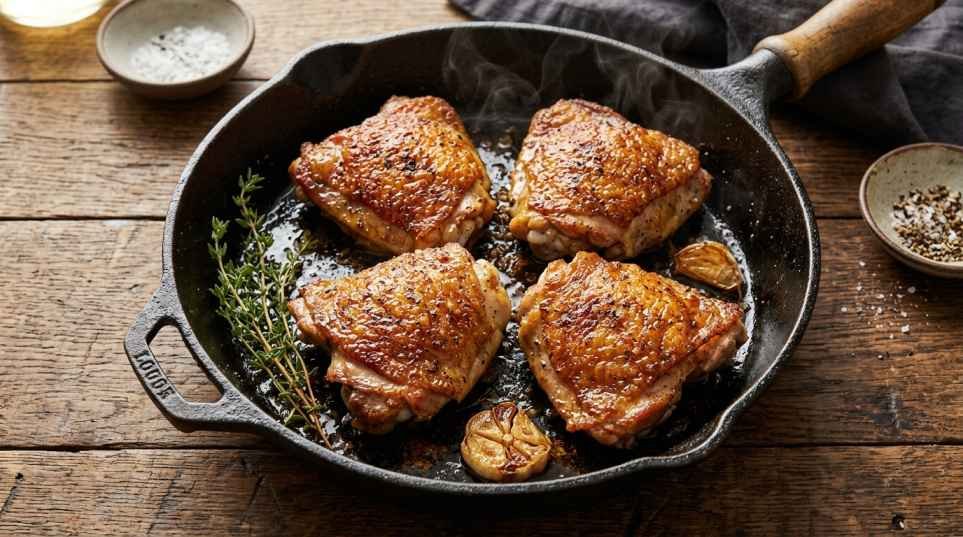
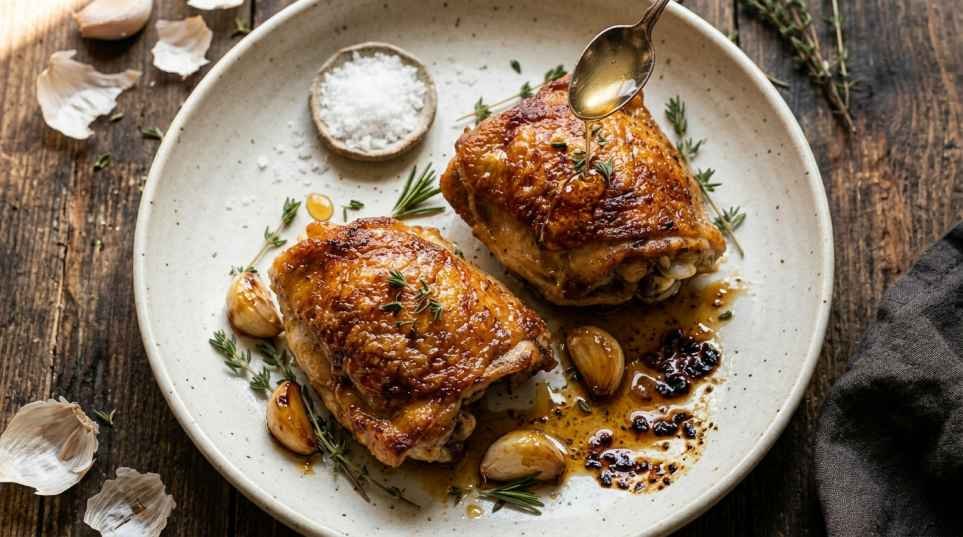
These crispy pan seared chicken thighs are golden on the outside, juicy on the inside, and ready in under 20 minutes, all in just one skillet. No oven required. No fancy technique. Just real, honest stovetop cooking that delivers restaurant-quality results every single time.
If you’ve ever ended up with pale, rubbery chicken thighs that stuck to the pan and steamed instead of seared, I’ve been there. This guide fixes all of that.
Table of Contents
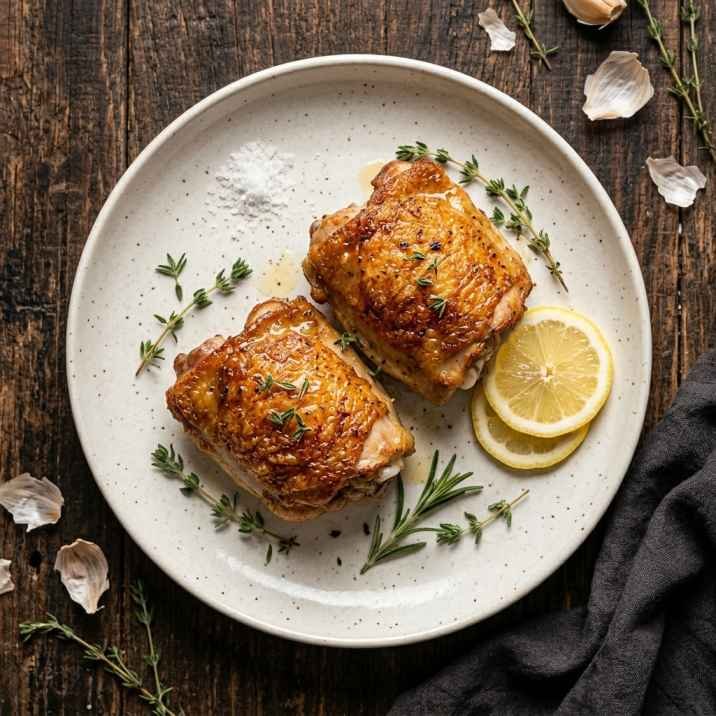

Crispy Pan Seared Chicken Thighs (Bone-In or Boneless)
Ingredients
Equipment
Method
- Pat each chicken thigh completely dry with paper towels on all sides. Season generously with salt, pepper, garlic powder, and smoked paprika on both sides. Pull the chicken from the refrigerator 10 to 15 minutes before cooking.
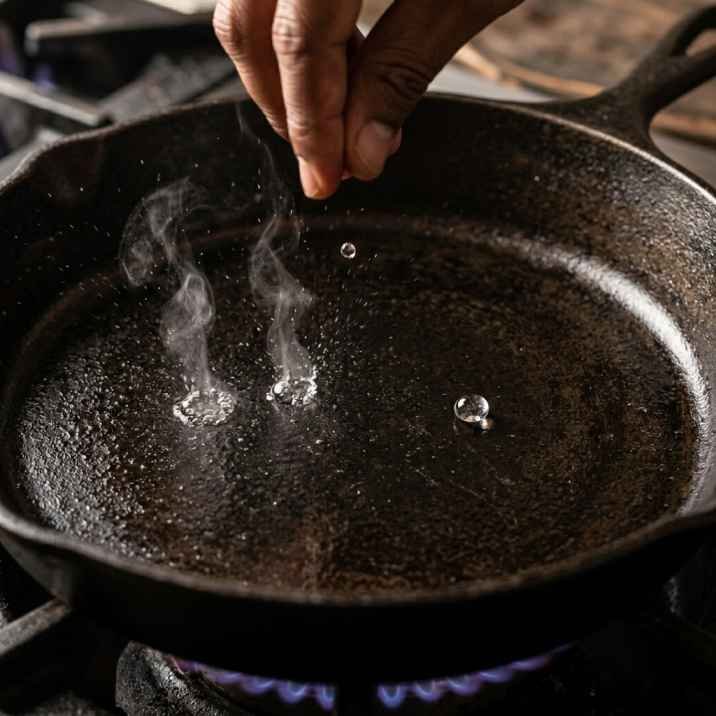
- Place a cast-iron skillet or a heavy stainless-steel skillet over medium heat. Let it heat for 2 minutes, then add the oil and swirl to coat. Wait another 30 seconds until the oil shimmers. Test readiness by flicking a few water drops into the pan; they should sizzle and evaporate immediately.
- For bone-in thighs: Place skin-side down and press gently for 10 seconds. Cook undisturbed on medium heat for 10 to 12 minutes until the skin is deeply golden and crispy. For boneless thighs: Place smooth-side down on medium-high heat for 5 to 7 minutes without moving.
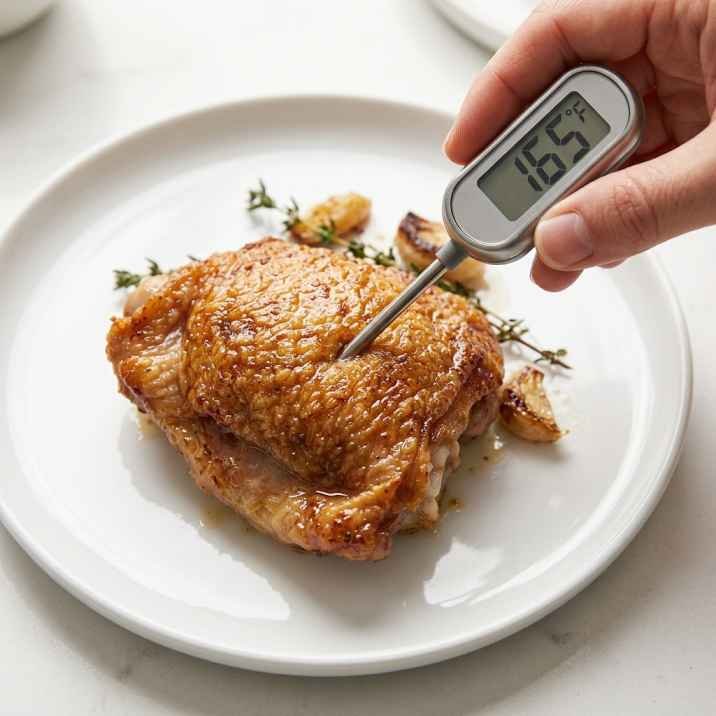
- Flip the chicken. Add butter, smashed garlic, and fresh herbs to the pan. Cook for another 10 to 12 minutes for bone-in thighs, or 5 to 7 minutes for boneless thighs. Tilt the pan and spoon the foaming butter over the chicken repeatedly for the last 2 minutes. Internal temperature must reach 165°F on an instant-read thermometer.
- Transfer the chicken to a wire rack or cutting board. Rest for 5 minutes before serving. This keeps the juices inside the meat where they belong.
Video
Notes
Why I Make This Recipe at Least Once a Week
I’ll be honest with you: I wasn’t always a chicken thigh person.
For years, I chased boneless, skinless chicken breasts like every other home cook who had been told they were the “healthier” option. Then, during a trip to a small neighbourhood bistro in New Orleans, I ordered a simple skillet chicken dish and took one bite that completely changed how I thought about poultry. The skin was shatteringly crispy. The meat underneath was impossibly juicy. The cook came out, and I asked him his secret. He laughed, shook his head, and said, “Dry the chicken. Hot pan. Don’t touch it.”
That was it. That was the whole secret.
I came home, pulled out my cast-iron skillet, and started testing. After about two dozen batches, some great, some genuinely embarrassing, I landed on the method I’m about to share with you. These skillet chicken thighs are now a weekly staple in my house, and they have been for the better part of four years.
Bone-In vs. Boneless Skinless: Which Should You Use?
One of the most common questions I get is whether this recipe works for both bone-in and boneless skinless chicken thighs. The answer is yes, but the approach changes slightly, and knowing the difference is what separates a good result from a great one.
Bone-In, Skin-On Chicken Thighs
Bone-in thighs take a little longer (around 20–25 minutes total) but reward your patience with deeper flavor and that iconic crispy skin that crackles when you cut into it. The bone conducts heat from the inside out, which helps the meat cook evenly without drying out.
I always start bone-in thighs skin-side down in a cold-to-medium skillet and let the fat render slowly before cranking up the heat. This technique gives you truly crispy skin chicken thighs without burning the outside before the inside is done.
Boneless Skinless Chicken Thighs
Boneless thighs are faster, typically 12 to 15 minutes total, and they’re easier for weeknight meals. They won’t give you that crackling skin, but they develop a gorgeous golden-brown crust that’s nearly as satisfying. Because there’s no skin to render, you go straight into a preheated, lightly oiled skillet over medium-high heat.
Both cuts are forgiving, both are delicious, and I’ll give you exact timing for each below.
What You’ll Need
Serves 4 | Prep: 5 min | Cook: 12–25 min
Ingredients
- 4 chicken thighs (bone-in skin-on, OR boneless skinless, your choice)
- 1 tablespoon high smoke-point oil (avocado, grapeseed, or refined coconut oil)
- 1 teaspoon kosher salt
- ½ teaspoon freshly cracked black pepper
- ½ teaspoon garlic powder
- ½ teaspoon smoked paprika
Optional but recommended:
- 2 tablespoons unsalted butter (for finishing)
- 3 garlic cloves, smashed
- Fresh thyme or rosemary sprigs
The Cooking Science: Why This Method Works
Before I give you the step-by-step, I want to explain the why behind each major step. Understanding the science makes you a better cook and helps you troubleshoot on the fly.
Why Patting the Chicken Dry Matters
Moisture is the enemy of crispiness. When you place wet chicken into a hot pan, the surface water immediately turns to steam. That steam creates a barrier between the chicken and the hot pan surface, essentially causing the meat to steam rather than sear. Patting the chicken thoroughly dry with paper towels removes surface moisture and allows direct contact between the protein and the hot metal where the golden-brown Maillard reaction occurs.
This is the single step most home cooks skip. Don’t skip it.
Why Overcrowding Ruins Searing
A crowded skillet traps steam. When you pack too many pieces into the pan at once, the ambient temperature drops, the steam can’t escape, and instead of searing, you’re essentially braising. Each piece needs at least an inch of breathing room around it. If you’re cooking for a crowd, work in batches and keep the finished pieces warm in a 200°F oven.
Why Medium Heat Works Best
High heat sounds like the logical choice for crispy chicken, but it’s actually medium to medium-high heat that gives the best results for pan-seared chicken thighs. Too high and the outside burns before the inside reaches the safe internal temperature of 165°F (per USDA food safety guidelines). Medium heat allows the fat to render out gradually, basting the skin in its own fat and producing an evenly golden crust.
Why Chicken Releases Naturally When Ready
Here’s one of my favorite kitchen instincts to teach: don’t force the chicken off the pan. When a protein is properly seared, it releases on its own. If you press a spatula under the thigh and it resists, it’s not ready to flip yet. Give it another minute. That resistance is the protein still bonding with the pan surface. Once the crust forms completely, it lets go cleanly. Trust the process.
Step-by-Step: How to Pan Sear Chicken Thighs
Step 1: Prep the Chicken (10 Minutes Ahead)
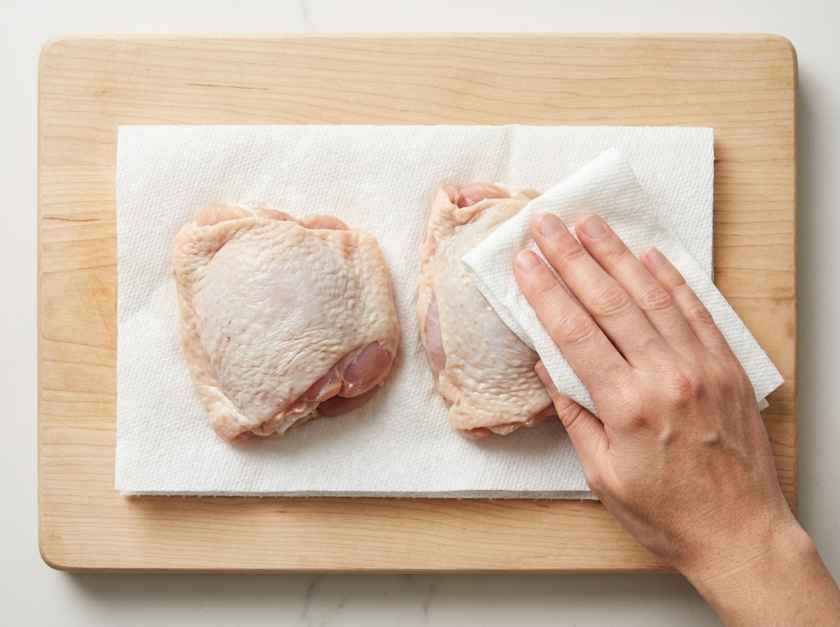
Pull the chicken out of the refrigerator about 10–15 minutes before cooking. You don’t need it at full room temperature (more on that in the FAQ), but you don’t want it ice cold either.
Pat each piece completely dry with paper towels, top, bottom, and sides. Season generously on both sides with salt, pepper, garlic powder, and paprika. Don’t be shy with the salt; it draws a little more moisture to the surface, which then evaporates quickly in the hot pan.
Step 2: Heat Your Skillet Properly
Place your cast-iron skillet or heavy stainless skillet over medium heat. Let it heat for about 2 minutes before adding oil. Add your oil and swirl to coat, then give it another 30 seconds. The oil should shimmer but not smoke.
A quick note on cast iron chicken thighs: Cast iron is my strong personal preference here because it holds heat exceptionally well and distributes it evenly. Once it’s hot, it stays hot even when you add cold chicken, which prevents that dreaded temperature drop that leads to steaming rather than searing.
Step 3: Sear
For bone-in thighs: Place skin-side down and press gently for the first 10 seconds to ensure full contact. Do not move them. Cook on medium heat for 10–12 minutes until the skin is deeply golden and crispy.
For boneless skinless thighs: Place smooth-side down in the hot skillet. Cook on medium-high heat for 5–7 minutes without disturbing.
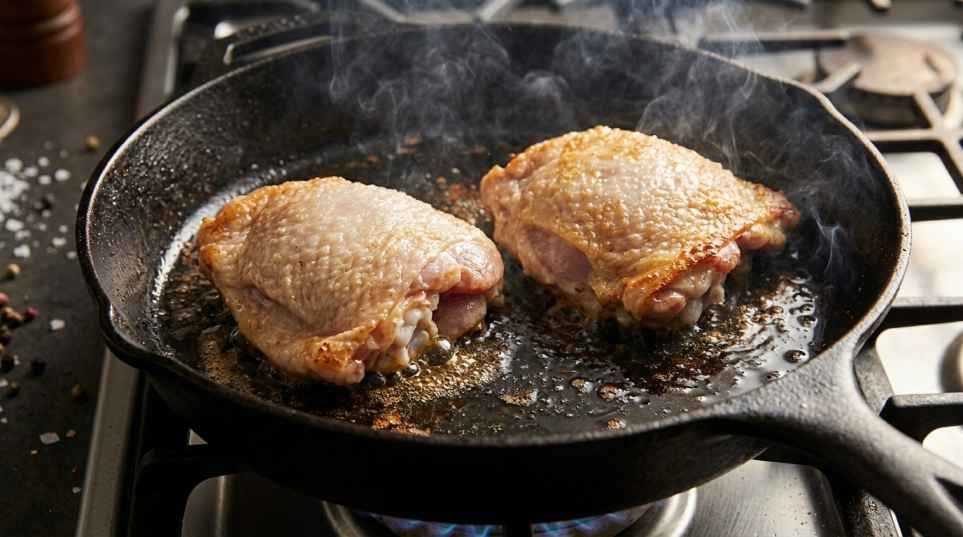
Step 4: Flip and Finish
Flip the chicken. For bone-in thighs, reduce the heat slightly and cook another 10–12 minutes until the internal temperature reads 165°F on an instant-read thermometer. For boneless thighs, cook another 5–7 minutes.
In the last 2 minutes, add butter, smashed garlic, and fresh herbs to the pan. Tilt the pan and spoon the foaming butter over the chicken repeatedly. This step is called basting, and it adds an enormous amount of flavor.
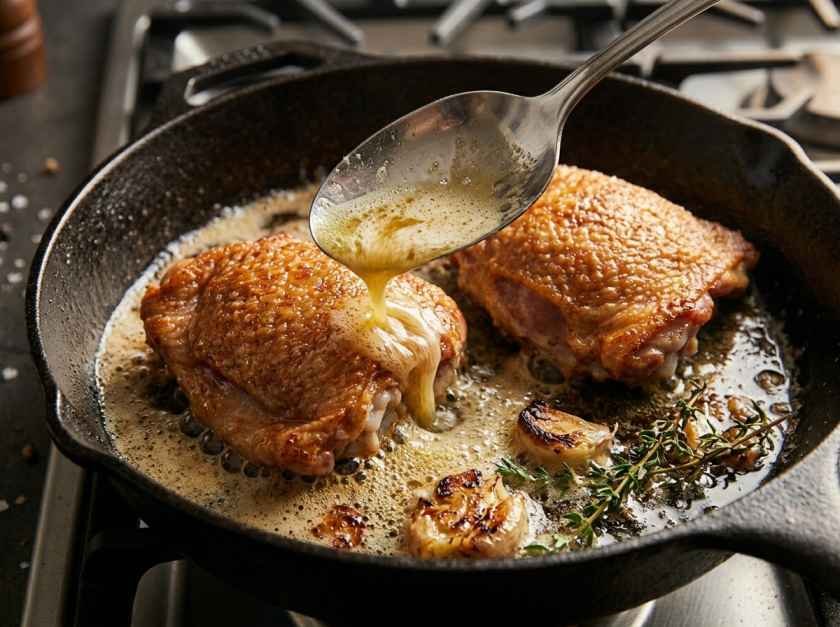
Step 5: Rest Before Serving
Remove the chicken from the pan and let it rest on a wire rack or cutting board for 3–5 minutes. Resting allows the juices to redistribute. Cut in too early, and all that juice runs right out onto your cutting board instead of staying in the meat.
5 Flavor Variations Worth Trying
Once you’ve mastered the basic method, try these variations. I’ve made every single one of them, and they’re all tested and reliable.
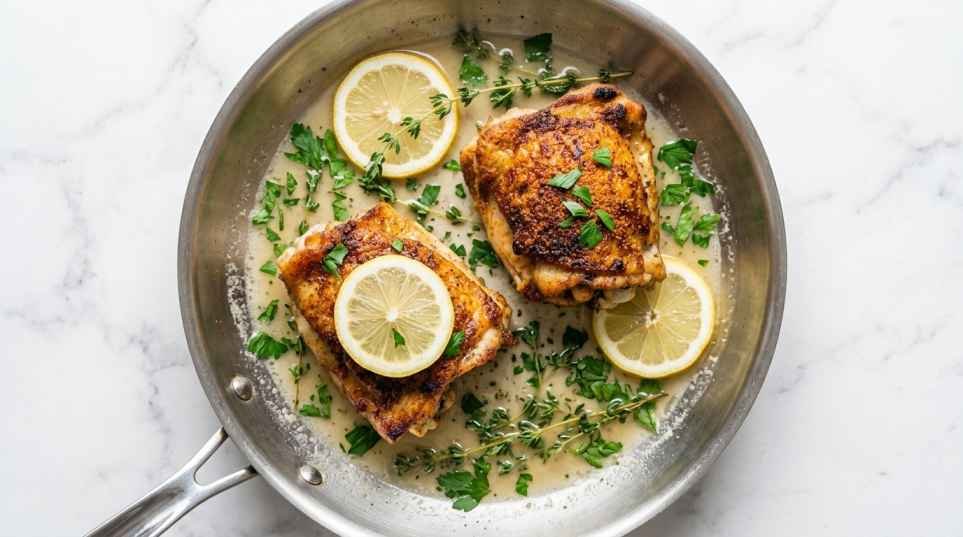
Garlic Butter: Add 4 tablespoons of butter and 6 smashed garlic cloves during the final basting stage. Finish with fresh parsley and a squeeze of lemon. The pan drippings left behind make an incredible base for a homemade chicken sauce. Do not waste them.

Lemon Herb: Marinate the chicken in lemon zest, olive oil, fresh thyme, and garlic for 30 minutes before cooking. Deglaze the finished pan with a splash of white wine and lemon juice for a quick pan sauce.
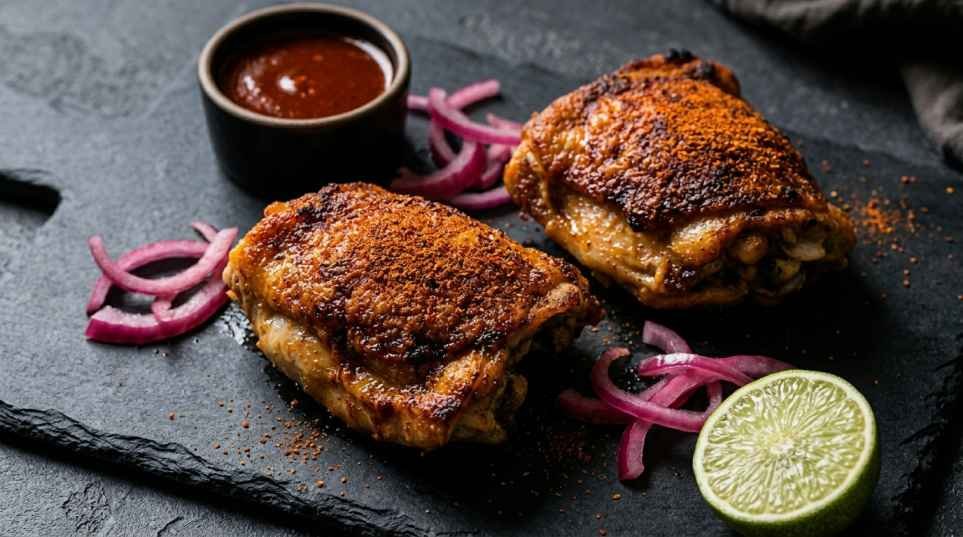
Spicy Cajun: Season with a blend of smoked paprika, cayenne, onion powder, dried oregano, and garlic powder before searing. Serve with hot sauce and pickled onions on the side.If you love bold, crunchy chicken, my crispy fried chicken recipe without Buttermilk uses a similar seasoning profile and
is just as easy to pull off on a weeknight.
Honey Garlic: After flipping, brush the cooked side with a mixture of honey, soy sauce, and minced garlic. Let it caramelize on the heat for the last 2 minutes of cooking. Watch it carefully, honey burns fast.
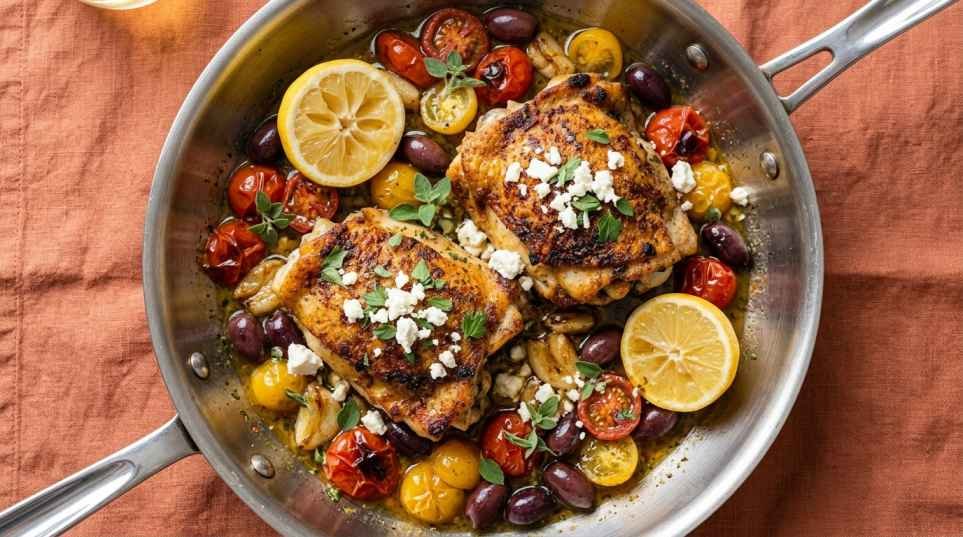
Mediterranean: Season with dried oregano, lemon zest, and garlic. After cooking, scatter kalamata olives, cherry tomatoes, and crumbled feta over the top. Cover loosely with foil and let it rest for 5 minutes.
My Biggest Mistake (And How I Fixed It)
Early on, I made one consistent error: I added the chicken to the pan too soon before the oil was properly hot. The result was chicken that bonded stubbornly to the pan, tore when I tried to flip it, and had a sad, pale crust.
The fix was simple. I started using the water-drop test. Flick a few drops of water into the pan. If they sizzle and evaporate immediately, the pan is ready. If they dance and skitter around in little beads, the pan is too hot. If they sit there and slowly evaporate, give it more time.
That one adjustment changed everything.
Frequently Asked Questions
Why are my chicken thighs not crispy?
The most common culprits are: wet chicken (skip patting dry), a pan that wasn’t hot enough, overcrowding, or flipping too early. Go back through each step, usually one of these four is the issue.
Should I use cast iron for pan seared chicken?
Cast iron is ideal because of its superior heat retention, but a heavy stainless steel skillet works well too. Avoid nonstick pans for this recipe; they can’t achieve the same high, consistent heat needed for a proper sear.
How long to pan sear chicken thighs?
Bone-in thighs: approximately 10–12 minutes per side on medium heat. Boneless skinless thighs: 5–7 minutes per side on medium-high heat. Always verify with a meat thermometer that the USDA recommends a minimum internal temperature of 165°F for poultry.
Can I use boneless thighs instead of bone-in?
Absolutely. Boneless skinless chicken thighs are excellent for this recipe and cook faster. The main difference is you won’t get a crackling skin, but you’ll still get a beautiful golden-brown crust with juicy meat inside.
Should chicken thighs be at room temperature before cooking?
I recommend pulling them from the fridge 10–15 minutes ahead, but full room temperature (30–45 minutes) isn’t necessary for thighs, the way some cookbooks suggest for thick steaks. The most important thing is that they’re completely dry before they hit the pan.
What oil is best for searing chicken?
Use a neutral oil with a high smoke point: avocado oil (smoke point ~520°F), grapeseed oil (~420°F), or refined coconut oil (~400°F) all work well. Avoid extra-virgin olive oil for high-heat searing, as its lower smoke point (~375°F) means it burns before the chicken is properly seared.
How do I know chicken thighs are done?
The only reliable method is an instant-read thermometer inserted into the thickest part of the meat (not touching the bone). According to the USDA chicken food safety guidelines, the minimum safe internal temperature for poultry is 165°F. Visually, the juices should run clear, and the meat should no longer appear pink at the center.
Final Thoughts
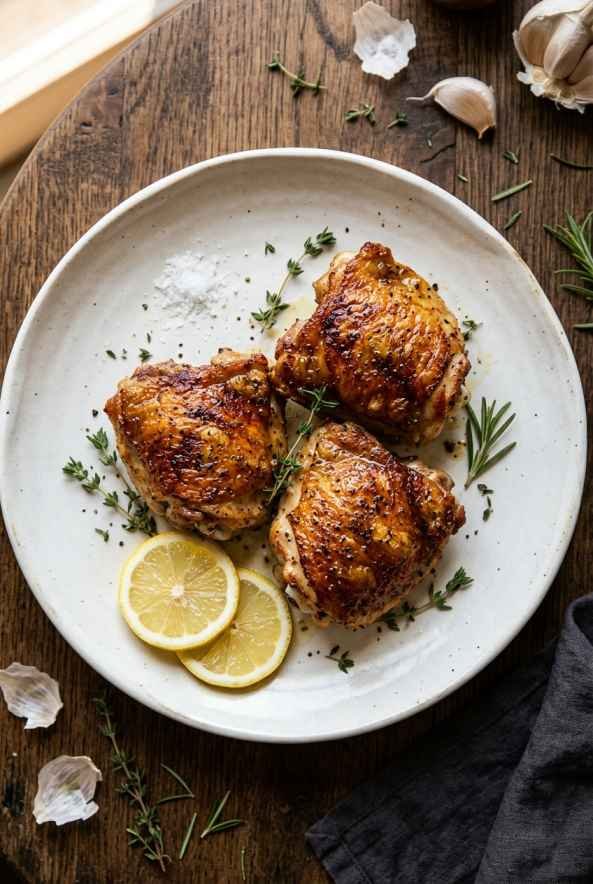
Pan-seared chicken thighs are one of those recipes that seem simple but require you to understand why each step matters. Once you understand the science of dry surface, right heat, no crowding, let it release naturally, you stop second-guessing yourself and start cooking with real confidence.
This is the kind of recipe I come back to after a long day when I don’t want to think too hard but still want something that tastes like I put in real effort. It’s quick. It’s done in one skillet. The cleanup takes five minutes. And every time I make it, it tastes just as good as the first time I got it right.
If you try it, I’d love to know which variation you went with. The honey garlic version is the one my family requests most, but the Cajun version is my personal favorite especially on a Friday night with a cold drink and zero plans.
Nutritional information is based on USDA FoodData Central averages for chicken thighs. Cooking temperatures follow FDA and USDA food safety guidelines for poultry.